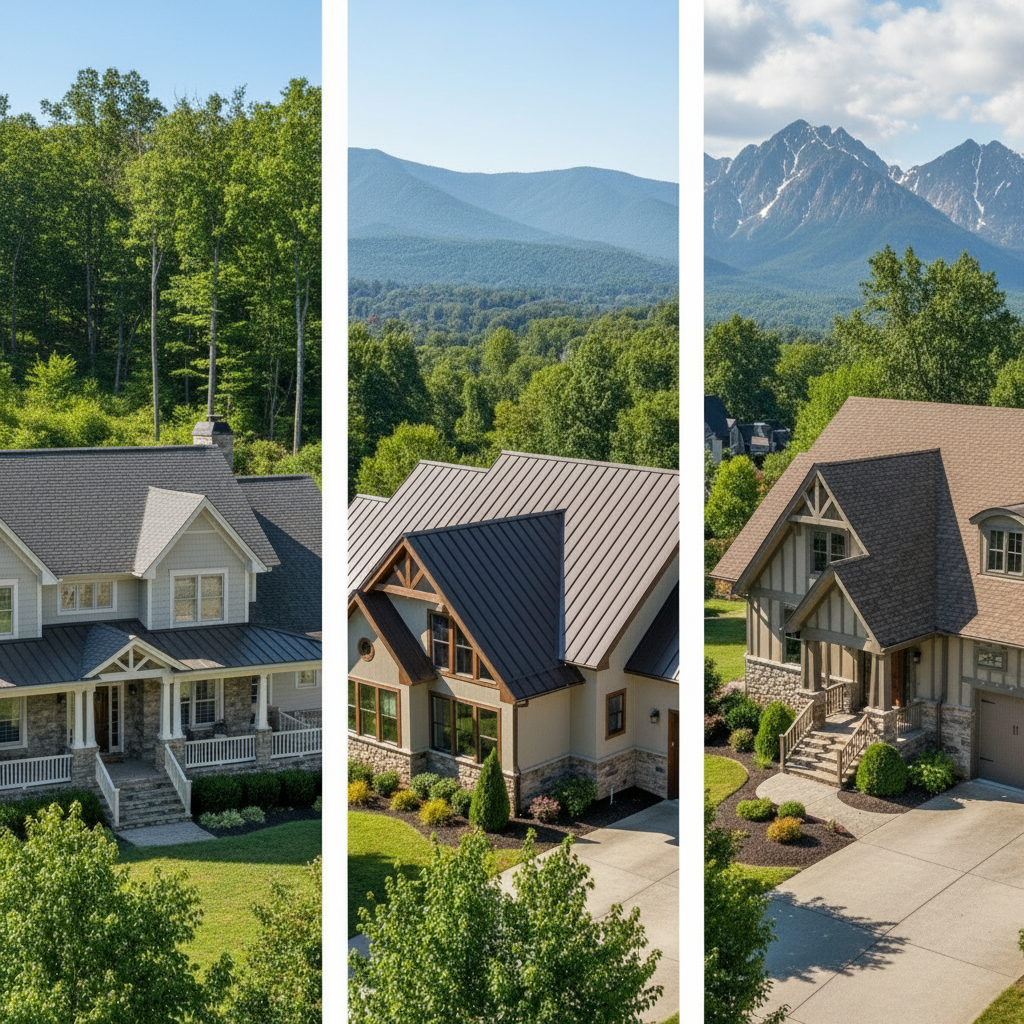
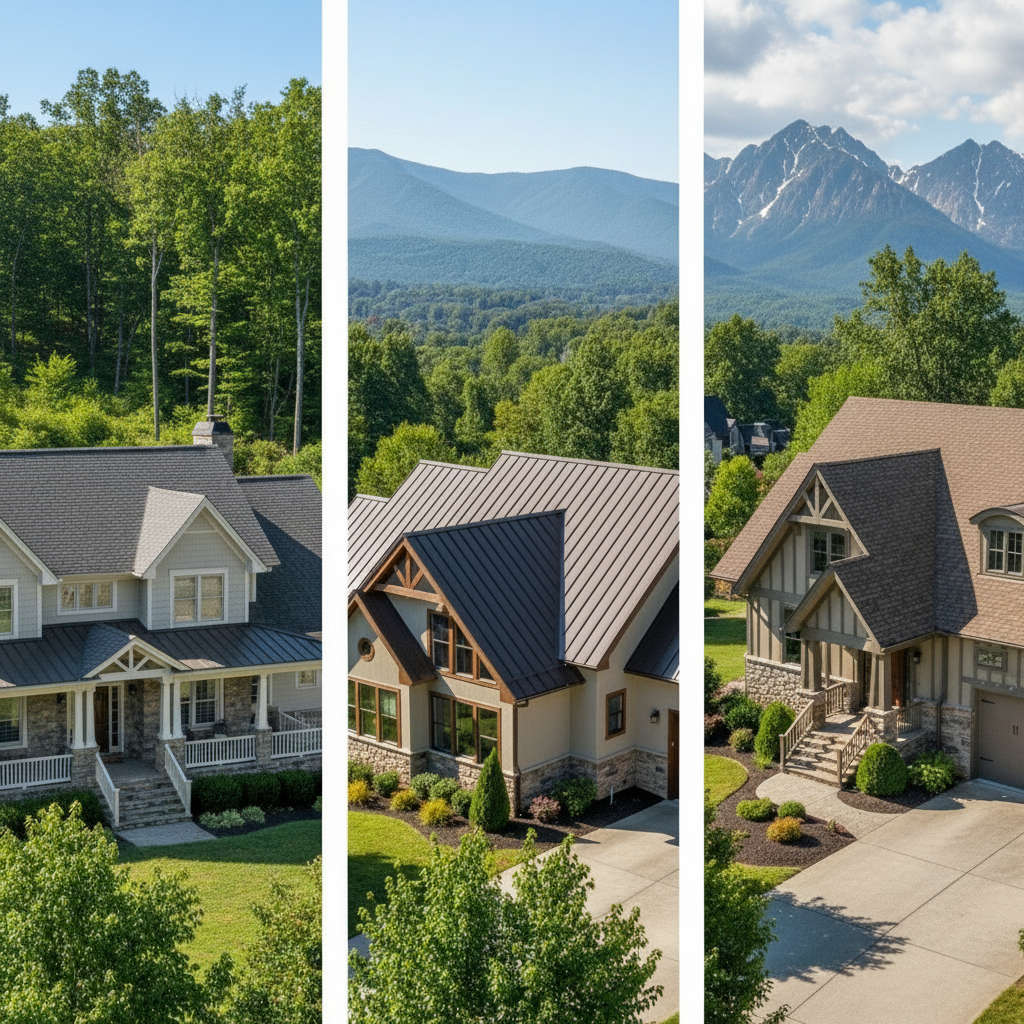
Choosing a new roof for your West Virginia home is one of the most important decisions you’ll make as a homeowner. Unlike paint colors or furniture, this choice will protect your family and investment for 25 to 50+ years. And here in West Virginia where we deal with heavy winter snowfalls, spring storms in Charleston, and humid summers in Huntington, your roofing material matters more than you might think.
You’re probably asking questions like:
- “Which roofing material performs best in West Virginia’s climate?”
- “How much do different roofing materials cost?”
- “What’s the difference between asphalt shingles and metal roofing, or are there other options?”
This comprehensive guide will answer all these questions and more. We’ll break down the most popular roofing materials for WV homes, compare costs and performance, and help you understand what works best for your unique situation. By the end, you’ll have a clear picture of which roofing material is right for your home and budget.
Ready to get started? Let’s dive in and find the perfect roof for your West Virginia home.
Why Your Roofing Material Choice Matters in West Virginia
Some homeowners treat roof replacement like checking a box. They choose whatever option is cheapest or copy what a neighbor installed. What we have seen firsthand after years of roofing throughout West Virginia is that choosing the wrong material for our climate can lead to premature repairs, higher energy bills, and ongoing issues that cost far more in the long run.
Choosing the right roofing material is more important than many homeowners realize, and here’s why:
West Virginia weather is brutal on roofs. The same roof could experience freezing temperatures with 2 feet of snow along with 90 degree days with extreme humidity all in the same calendar year. Not every material handles these extremes equally.
The wrong choice costs money repeatedly. It often shows up as repeated repairs every few years. We have replaced roofs that were barely ten years old, not just because of the climate, but because of poor installation and lower-quality materials that could not handle West Virginia’s temperature swings, moisture, and seasonal stress.
Energy bills reflect your roof’s performance. Some roofing materials manage heat better in the summer and help retain warmth in the winter. Over time, that difference becomes noticeable in your monthly utility bills.
Home value depends on roof quality. When you sell, buyers and inspectors will scrutinize your roof. Quality materials professionally installed add value; questionable choices raise red flags.
The good news? Once you understand what makes a roofing material right for West Virginia, the choice becomes much clearer.
Key Factors to Consider Before Choosing Your Roofing Material
Before we dive into specific materials, let’s talk about the factors that should guide your decision. Every West Virginia home is different, and what works for a ranch style farmhouse in Beckley might not be ideal for a Victorian style home in Bridgeport.
Budget: Upfront Cost vs. Long-Term Value
Initial investment varies wildly
Asphalt shingles might cost $11,000-$17,000 for an average home, while standing seam metal could run $25,000-$60,000+
Lifespan changes the math
Lifespan changes the equation. A $14,000 asphalt roof lasting around 25 years averages about $560 per year. A $30,000 standing seam metal roof lasting 75 years or more comes out to roughly $400 per year while offering superior durability, weather resistance, and long-term reliability.
Energy savings offset costs
Standing seam metal roofing reflects heat more effectively, which can reduce cooling costs by $200 to $400 each year. Over 30 years, that can add up to $6,000 to $12,000 in energy savings.
West Virginia’s Climate Challenges
Snow load capacity is critical
In higher elevations, roofs regularly handle 2-3 feet of snow. Your material needs to support that weight.
Wind resistance protects your investment
West Virginia storms can bring wind speeds of 70 to 90 mph, making wind ratings an important factor in roofing materials. TAMKO architectural shingles are rated for winds up to 160 mph. Properly rated materials help keep shingles secured and reduce the risk of blow-offs during severe weather.
Moisture resistance prevents rot and mold
Appalachian humidity creates perfect conditions for moisture problems that can lead to mold, mildew, and rot. Some materials resist these issues better than others.
Temperature fluctuations cause expansion/contraction
From 0°F in January to 95°F in July, materials must handle this without cracking or warping.
Your Home’s Architecture and Structure
- Weight capacity isn’t unlimited. Older homes may not support heavy materials like slate without structural reinforcement.
- Asphalt shingles typically weigh about 2.5 to 3.5 pounds per square foot
- Metal roofing averages roughly 1 to 1.5 pounds per square foot
- Natural slate can weigh 8 to 10 pounds per square foot or more
- Asphalt shingles typically weigh about 2.5 to 3.5 pounds per square foot
- Roof pitch affects options. Steep roofs are suitable for most roofing materials, while low-slope roofs require systems designed to shed water effectively.
- Architectural style guides aesthetics. Your roof should enhance your home’s character rather than work against it.
Longevity and Maintenance
- Lifespan ranges from 20 to 100+ years. Roofing lifespan varies by material and build quality. Standard asphalt shingles often last 25 to 30 years, while higher-quality architectural shingles, such as 50-year options from TAMKO, are designed to provide significantly longer service life when installed correctly. Standing seam metal can protect a home for 75 to 100 years or more.
- Maintenance needs vary dramatically. Standing seam metal roofs generally require very little ongoing maintenance. Metal roofs with exposed fasteners rely on EPDM washers that gradually break down from sun exposure and weather. Even with hooded fasteners, those washers can begin to fail after several decades. Without protective systems, maintenance or replacement may be needed much sooner, sometimes within 10 to 20 years depending on exposure. Wood shake roofs require regular treatment and upkeep to manage moisture and deterioration.
Local Building Codes and HOA Requirements
- Roofing decisions are not based on material alone. Local building codes vary by city or municipality, particularly when it comes to decking gap requirements, ice and water shield application, and approved installation methods.
- HOA restrictions may limit choices. Some neighborhoods have specific requirements related to roofing materials, colors, or visible styles that homeowners must follow.
With these considerations in mind, it helps to understand how different roofing materials perform and which ones are commonly used on homes across West Virginia.
Best Roofing Materials for West Virginia Homes
3-tab Asphalt Shingles: The Outdated Choice for a Reason
3-tab shingles were once the standard in residential roofing and are still found on many older homes across West Virginia. Their flat, brick-pattern appearance kept costs low for decades, but modern roofing demands have largely moved past them.
Cost: $4.00 to $6.00 per square foot in West Virginia
Average 2,000 sq ft home: $10,000-$14,000 Lifespan: 15-25 years
Pros of 3-Tab Shingles:
- Lower upfront cost. Often the cheapest shingle option available.
- Simple appearance. Flat, uniform look that matches older homes.
- Lightweight. Compatible with most existing roof structures.
- Fast installation. Straightforward design allows quick installation.
Cons of 3-Tab Shingles:
- Shorter lifespan than premium options. Typically wear out faster than architectural or metal roofing.
- Lower wind resistance. More prone to blow-offs during West Virginia storms.
- Vulnerable to temperature swings. Freeze-thaw cycles can accelerate cracking and granule loss.
- Algae growth in humid conditions. Dark streaking is common over time.
- Outdated appearance. Flat, brick-style pattern lacks the depth and curb appeal of newer shingles.
- Limited long-term value. Often replaced sooner, increasing lifetime roofing costs.
Best For: Homeowners needing a short-term, budget-conscious roofing solution or maintaining consistency with an older home where aesthetics and longevity are not the primary concern.
Metal Roofing: The Durable, Energy-Efficient Performer
Metal roofing has exploded in popularity across West Virginia over the past decade. Once associated mainly with barns, today’s metal roofing comes in styles that beautifully complement residential homes.
Cost: $8-$14 per square foot installed
Average 2,000 sq ft home: $16,000-$28,000
Lifespan: 50-75+ years
Pros of Metal Roofing:
- Exceptional longevity. 50-75+ years with minimal maintenance; likely the last roof you’ll need.
- Snow slides off naturally. Prevents dangerous ice dams and reduces weight load.
- Outstanding wind resistance. Rated up to 140 mph, with standing seam systems engineered to exceed 180 mph.
- Energy efficiency. Can reduce cooling costs by 10-25% in summer.
- Fire resistance. Class A fire rating provides peace of mind.
- Environmentally friendly. Contains 25-95% recycled content, 100% recyclable.
- Low maintenance. Virtually no upkeep needed.
Cons of Metal Roofing:
- Higher upfront investment. Roughly double the cost of asphalt shingles.
- Noise during heavy rain/hail. Slightly noisier than asphalt (proper insulation minimizes this).
- Denting from large hail possible. Golf ball-sized hail can cause cosmetic denting.
- Installation requires expertise. Not every contractor has metal roofing experience.
- Expansion/contraction noise. Occasional popping (oil panning) during rapid temperature changes.
Best For: Homeowners planning to stay long-term who want to invest once and be done. Excellent for snow-heavy areas, steep roofs, and anyone prioritizing energy efficiency and environmental responsibility.
Architectural Shingles: The Upgraded Asphalt Option
Architectural shingles (also called dimensional or laminate shingles) represent a step up from standard three-tab asphalt shingles. They feature multiple layers creating a textured appearance that mimics wood shakes or slate.
Cost: $4.50-$7.00 per square foot installed
Average 2,000 sq ft home: $12,000-$19,000
Lifespan: 25-35 years (some premium versions up to 50 years)
Pros of Architectural Shingles:
- Enhanced curb appeal. Dimensional look adds depth and upscale appearance
- Budget-friendly. Most affordable option for quality roof replacement
- Better wind resistance. Typically rated 110-130 mph vs. 60-90 mph for basic shingles.
- Longer lifespan. 25-35 years vs. 15-20 for three-tab shingles
- Thicker, more durable. Less prone to tearing, cracking, and wind damage
- Moderate price increase. Only 20-30% more than standard shingles with significantly better performance
Cons of Architectural Shingles:
- Still shorter-lived than metal or slate. Won’t match 50-70 year lifespan of premium materials like standing seam and slate.
- Heavier than standard shingles. May require reinforcement on older structures
- Same algae/moss concerns. Despite upgraded construction, moisture issues remain
- Not dramatically more energy-efficient. Still asphalt-based and absorbs significant heat
Best For: Homeowners who want their roof to enhance appearance without breaking the budget. Perfect for traditional and craftsman-style homes where dimensional look complements the architecture.
Slate Roofing: The Premium, Century-Long Investment
Slate roofing represents the pinnacle of roofing materials. Quarried from natural stone and split into tiles, slate has protected buildings for centuries. In West Virginia, slate roofs can still be found on historic homes in neighborhoods like South Park and on older WVU buildings, many of which have been in service for 100 years or more and are still performing today.
Cost: $15-$30+ per square foot installed
Average 2,000 sq ft home: $35,000-$70,000+
Lifespan: 75-100+ years (some exceed 150 years)
Pros of Slate Roofing:
- Unmatched longevity. 75-100+ years; genuinely a once-in-a-lifetime investment
- Timeless, elegant appearance. Natural beauty in varied colors (gray, green, purple, red)
- Completely fire-resistant. Non-combustible with highest fire rating
- Virtually maintenance-free. Doesn’t rot, support algae/moss, or deteriorate from UV
- Exceptional weather resistance. Impervious to moisture, wind, and freeze-thaw cycles
- Increases home value significantly. Can add $20,000-$40,000+ to home value
- Environmentally responsible. 100% natural, environmental impact per year is minimal
Cons of Slate Roofing:
- Substantial upfront investment. Most expensive common roofing material
- Extremely heavy. Weighs 800-1,500 lbs per square; many homes need structural reinforcement
- Specialized installation required. Requires specific expertise; mistakes are costly
- Individual tile replacement tricky. Finding experienced slate repair contractors can be challenging
- Walking requires care. Tiles can crack under concentrated weight
- Limited color options. Restricted to natural colors nature provides
Best For: Homeowners with historic or high-end properties planning to stay long-term. Perfect for families passing homes through generations, historic restorations, and anyone who values timeless beauty and never wants to think about their roof again.
Synthetic/Composite Roofing: The Modern Alternative
Synthetic or composite roofing uses rubber, plastic, and polymer compounds to create tiles that mimic slate, wood shakes, or other premium materials while weighing less and costing considerably less.
Cost: $7-$12 per square foot installed
Average 2,000 sq ft home: $30,000-$50,000
Lifespan: 40-50 years
Pros of Synthetic Roofing:
- Authentic appearance at lower cost. Nearly indistinguishable from real materials from ground level; costs 40-60% less
- Much lighter. Weighs about the same as asphalt; no structural concerns
- Extended lifespan. Often lasts longer than standard asphalt shingles and approaches the longevity of premium systems
- Excellent impact resistance. Handles hail and falling debris better than many natural materials
- Easier installation. Installs faster than slate and requires less specialized labor
- Improved warranties. Many manufacturers offer warranties up to 50 years
Cons of Synthetic Roofing:
- Relatively new technology. Does not yet have the century-long performance history of natural slate
- Quality varies dramatically. Higher-end products perform well, while lower-quality options may fade, crack, or become brittle sooner
- May not satisfy historic requirements. Often not approved where authentic materials are required
- Close inspection reveals difference. At close range, synthetic materials may lack the natural variation of real stone or wood
- UV degradation concerns. Lower-grade products can fade or degrade over time with prolonged sun exposure
Best For: Homeowners who want the appearance of slate or wood with less weight, lower cost, and improved impact resistance, while accepting that long-term performance depends heavily on product quality and proper installation.
Wood Shakes: A Traditional Material With Modern Limitations
Wood shake roofing is best known for its natural appearance and historic use on older homes. Traditionally made from cedar or redwood, wood shakes were widely used before modern roofing materials became available. While visually appealing, they come with significant tradeoffs that make them a poor fit for most West Virginia homes today.
Cost and Lifespan
- Installed Cost: $8-$12 per square foot
- Average 2,000 sq ft home: $18,000-$24,000
- Lifespan: 20-30 years (with excellent maintenance)
Pros of Wood Shakes:
- Natural appearance. Offers a rustic look that manufactured materials attempt to replicate
- Repairable in sections. Individual shakes can be replaced as they fail
- Environmentally friendly. Renewable resource when sustainably harvested
- Historic compatibility. Sometimes required on designated historic properties
Cons of Wood Shakes:
- High ongoing maintenance. Requires regular treatments every 3 to 5 years to resist rot, insects, and moisture
- Poor performance in humid climates. West Virginia’s moisture and humidity accelerate decay, warping, and splitting
- Fire risk. Wood shakes are combustible and often restricted by building codes or insurance carriers without fire-retardant treatment
- Shorter effective lifespan. Even with maintenance, many wood shake roofs deteriorate faster than modern alternatives
- Moss and algae growth. Organic material creates ideal conditions for growth that speeds up deterioration
- Insurance limitations. Some insurers charge higher premiums or refuse coverage altogether for wood shake roofs
Best For: Wood shake roofing is generally limited to historic restorations or specialty applications where appearance outweighs performance, maintenance, and insurance considerations. For most West Virginia homeowners, modern alternatives provide far better durability, safety, and long-term value with significantly less upkeep.
Roofing Material Costs in West Virginia
Understanding the full cost picture helps you make an informed decision. Here’s what you can expect to pay for different materials in West Virginia:
| Roofing Material | Cost Per Sq Ft | 2,000 Sq Ft Home | Lifespan | Cost Per Year |
| 3-Tab Asphalt Shingles | $4.00-$6.00 | $10,000-$14,000 | 15-25 years | $400-$930 |
| Architectural Shingles | $5.00-$7.00 | $12,000-$18,000 | 25-35 years | $340-$720 |
| Metal Roofing(Exposed Fastener) | $8.00-$12.00 | $16,000-$24,000 | 40-60 years | $229-$560 |
| Standing Seam Metal Roofing | $10.00-$14.00 | $20,000-$28,000 | 70-100+ years | $200-$400 |
| Synthetic/CompositeRoofing | $7.00-$12.00 | $30,000-$50,000 | 40-50 years | $600-$1250 |
| Wood Shakes | $8.00-$12.00 | $18,000-$24,000 | 20-30 years | $600-$1,200 |
| Slate Roofing | $15.00-$30.00+ | $35,000-$70,000+ | 75-100+ years | $300-$900 |
Important note: These costs include materials, labor, tear-off, disposal, and standard underlayment.
Additional costs may include:
- Roof decking replacement: $2-$4 per square foot if rotted decking is discovered
- Structural reinforcement: $3,000-$10,000+ for heavy materials like slate
- Improved ventilation: $300-$1,500 depending on system
- Upgraded underlayment: $0.50-$1.50 per square foot for premium options
- Complex roof features: Chimneys, skylights, valleys, steep pitches, and roof design increase labor time and cost
Cost by West Virginia City
Roofing costs can vary slightly by location due to labor rates and material delivery:
- Morgantown: Often trends higher than surrounding areas due to larger home sizes, rental density, and steady demand tied to WVU and surrounding development
- Bridgeport: Slightly above average due to higher median incomes, newer construction, and larger roof footprints
- Charleston: Generally aligns with statewide averages; competitive contractor market keeps pricing stable
- Huntington: Tends to be slightly below average with good contractor availability and more uniform home sizes
- Parkersburg: verage to slightly below average pricing depending on neighborhood and roof complexity
- Wheeling: Typically near average; proximity to Pittsburgh can influence material sourcing and availability
- Davis / Canaan Valley: Can trend higher due to elevation, weather exposure, steep roof designs, and limited contractor availability during peak seasons
Eclipse Construction’s Material Selection Process
Choosing your roofing material shouldn’t feel overwhelming. We’ve developed a straightforward process that helps West Virginia homeowners make confident decisions:
Free Roof Inspection and Assessment
- We come to you at your convenience. Serving all areas throughout West Virginia.
- Thorough exterior and interior evaluation. Inspect existing roof, check attic ventilation/insulation.
- Honest assessment of what you need. If repairs will buy you more years, we’ll tell you.
- Photo documentation. Show you exactly what we’re seeing.
- No pressure, no obligation. Genuinely free assessment with space to decide.
Structural Evaluation
- Weight capacity assessment. Evaluate if your structure can handle heavier materials.
- Roof decking condition check. Identify rotted or damaged decking needing replacement (as much as we can).
- Truss and rafter inspection. Verify underlying structure is sound for roof installment.
- Reinforcement recommendations. Clear cost estimates if structural upgrades are needed.
Budget Consultation
- Transparent pricing for all options. Detailed written estimates with no hidden fees.
- Long-term value discussion. Total cost of ownership including lifespan, maintenance, energy savings.
- Financing options available. Work with financing partners to make investment manageable.
- Material comparison at your price point. Show what’s possible within your budget.
Style Recommendations
- Color and style samples. Physical samples you can see and touch in your actual lighting.
- Neighborhood context. Choose materials that complement your home and fit your neighborhood.
- Architectural style guidance. Recommend materials that enhance your home’s character.
- Digital visualization. Show renderings of how different materials will look on your home.
Warranty Options
- TAMKO warranty coverage. As TAMKO-certified contractors, we offer manufacturer warranties.
- Workmanship warranty. Our installation warranty ensures we’ll make any issues right.
- Registration and documentation. Handle all warranty registration for your records.
- Maintenance recommendations. Explain requirements to preserve warranty coverage.
Installation Timeline Expectations
- Realistic scheduling. Honest timelines with clear communication about delays.
- Typical project duration. Asphalt 2-4 days, metal 4-7 days, slate 1-4 weeks.
- Daily schedule clarity. Explain what happens each day, crew arrival/departure times.
- Communication throughout. Direct contact with project manager, daily progress updates.
Questions to Ask Your Roofing Contractor
Not all roofing contractors are created equal. Protect yourself by asking these critical questions before signing any contract:
Experience with Specific Materials
- “How many roofs of this material have you installed in West Virginia?”
- “Can I see photos of completed projects with this material?”
- “Can you provide references from recent projects?”
- “What challenges does this material face in our climate, and how do you address them?”
Certifications and Manufacturer Relationships
- “What manufacturer certifications do you hold?”
- “Are you licensed and insured?” (Verify liability insurance and workers’ comp)
- “How long have you been in business?”
Warranty Coverage Details
- “What does the manufacturer warranty cover, and for how long?”
- “What workmanship warranty do you provide?”
- “Who do I contact if problems arise?”
- “What could void my warranty?”
Installation Process and Timeline
- “What’s included in your estimate?” (Verify tear-off, disposal, underlayment, drip edge, cleanup included)
- “How long will the installation take?”
- “How will you protect my property and landscaping?”
- “What happens if you discover unexpected damage during a tear-off?”
References from Similar Projects
- “Can you provide references from projects within 30 miles of my home?”
- “May I see a completed project in person?”
- “What do past customers say about your communication and professionalism?”
Red flags to avoid:
- Contractors who pressure immediate decisions or claim “special prices expire today”
- Contractors requiring large upfront payments (50%+) before work begins
- Estimates dramatically lower than others (usually indicates corner-cutting)
- Uninsured contractors (you could be held liable for injuries or damage)
- Poor communication, vague answers, or unprofessional behavior
Making Your Final Decision
You’ve learned about materials, considered WV’s climate challenges, and asked the right questions. Here’s how to move forward with confidence:
How to Weigh All the Factors
Start by ranking what matters most to you personally.
Is it budget? Longevity? Appearance? Energy efficiency? The best choice depends on how long you plan to stay, your budget, and how you want your home protected over time.
Create a simple comparison chart with your top material choices across the top and your priority factors down the side. Rate each material on each factor. This visual comparison often makes the right choice obvious.
Consider your timeline.
If you’re selling in 5-7 years, investing in a 50-year slate might not make financial sense. But if you’re passing this home to your children, that same slate or metal roof becomes incredibly valuable.
When to Prioritize Durability vs. Budget
If your home has structural issues, water damage history, or you’re in an area with extreme weather, prioritize durability. Saving $5,000 upfront doesn’t help if you’re dealing with $15,000 in water damage repairs five years later.
If your home is structurally sound, well-maintained, and in a moderate climate area, a quality mid-range option like architectural shingles might serve you perfectly. Not every home needs the most expensive solution.
Consider your emergency fund and overall financial health. If paying for a premium roof would drain your savings, a quality mid-range option is the smarter choice. Financial peace of mind matters.
Why Professional Assessment Matters
Here’s the truth: you can research for weeks and still miss critical factors specific to your home. Does your attic have adequate ventilation? Is your decking in good condition? Can your structure support heavier materials?
After inspecting thousands of roofs across West Virginia, we can often identify issues in minutes that homeowners may never notice. A professional assessment looks at the entire roofing system, including structure, ventilation, insulation, flashing, and other critical components.
Plus, experienced contractors know local building codes, permit requirements, and HOA restrictions that could affect your material choice.
Frequently Asked Questions
There isn’t one single best option for every home. The right choice depends on your budget, your home’s structure, and what you value most long term. For many West Virginia homes, metal roofing delivers the strongest combination of durability, weather resistance, and lifespan.
Asphalt shingles remain the best overall value for homeowners focused on affordability.
Slate is best suited for historic or high end properties where long term longevity outweighs upfront cost.
How long do different roofing materials last in West Virginia?
- Asphalt shingles: 20-30 years
- Architectural shingles: 25-35 years, with premium options lasting longer
- Metal roofing: 50-70 years or more, depending on the system type
- Synthetic/composite: 40-50 years
- Wood shakes: 20-30 years (with maintenance)
- Slate: 75-100+ years
Which roofing material is most energy-efficient?
Metal roofing with reflective coatings is the most energy-efficient, reducing cooling costs by 10-25%. Light-colored asphalt shingles with reflective granules also help. Dark asphalt shingles are the least energy-efficient.
Can my home support a heavy roofing material like slate?
Many homes cannot support slate without structural reinforcement. Slate roofing can weigh between 800 and 1,500 pounds per square, which is several times heavier than asphalt shingles. A proper structural assessment helps determine whether a home can safely support heavier roofing materials.
What roofing material handles snow best?
Metal roofing handles snow best because it sheds snow naturally, preventing ice dams and dangerous accumulation. Asphalt and architectural shingles handle moderate snow well but can develop ice dams in heavy snow areas.
How much does a new roof cost in West Virginia?
For an average 2,000 sq ft home:
- 3-Tab shingles: $10,000-$14,000
- Architectural shingles: $12,000-$18,000
- Metal roofing: $16,000-$28,000, depending on the system type
- Slate: $35,000-$70,000 or more
Do I need to replace my roof decking?
Not necessarily. We inspect decking during tear-off and only replace rotted or damaged sections. Many roofs have perfectly good decking that doesn’t need replacement.
What’s the most affordable roofing material?
Standard asphalt shingles have the lowest upfront cost, typically around $5 to $7 per square foot installed in West Virginia. When you look at long term value, metal roofing often delivers comparable cost per year with significantly better durability and performance.
Conclusion: Choose the Right Roof for Your West Virginia Home
Choosing the right roofing material for your West Virginia home is one of the most important decisions you will make as a homeowner. Your roof protects your family, your belongings, and the investment you have worked hard to build.
The good news? You now have the information you need to make a confident, informed choice. You understand how West Virginia’s unique climate affects different materials. You know the pros, cons, and costs of asphalt shingles, metal roofing, architectural shingles, slate, synthetic materials, and wood shakes. You can evaluate your priorities and match them to the right material for your situation.
At Eclipse Construction, we have spent years helping West Virginia homeowners make this decision with confidence. We have worked on roofs across the state, from Martinsburg to Morgantown, Charleston to Huntington, and throughout the mountain communities in between. That experience has given us a clear understanding of which materials perform well in West Virginia’s climate and which tend to struggle over time.
Our TAMKO certification reflects our commitment to proper installation and quality standards. Combined with our experience working across West Virginia, it gives us a strong understanding of local roofing challenges, from heavy mountain snowfall to humid valley summers and the severe storms that pass through each year.
Whether you choose asphalt shingles, metal roofing, slate, or another material, our focus is making sure your roof is installed correctly and built to perform reliably for decades to come.
Ready to get started? Contact Eclipse Construction today for your free consultation and roof inspection. We will assess your home’s specific needs, explain your options in plain English, and help you choose the right roofing material for your budget and long term goals.
No high pressure sales. No confusing jargon. No hidden fees. Just honest answers, expert guidance, and quality craftsmanship from roofing professionals you can trust here in West Virginia and beyond.
Call us today or visit our website to schedule your free roof inspection. Let’s find the perfect roofing solution for your West Virginia home.