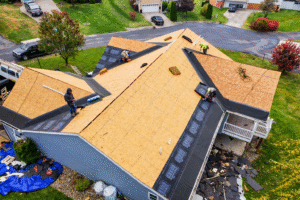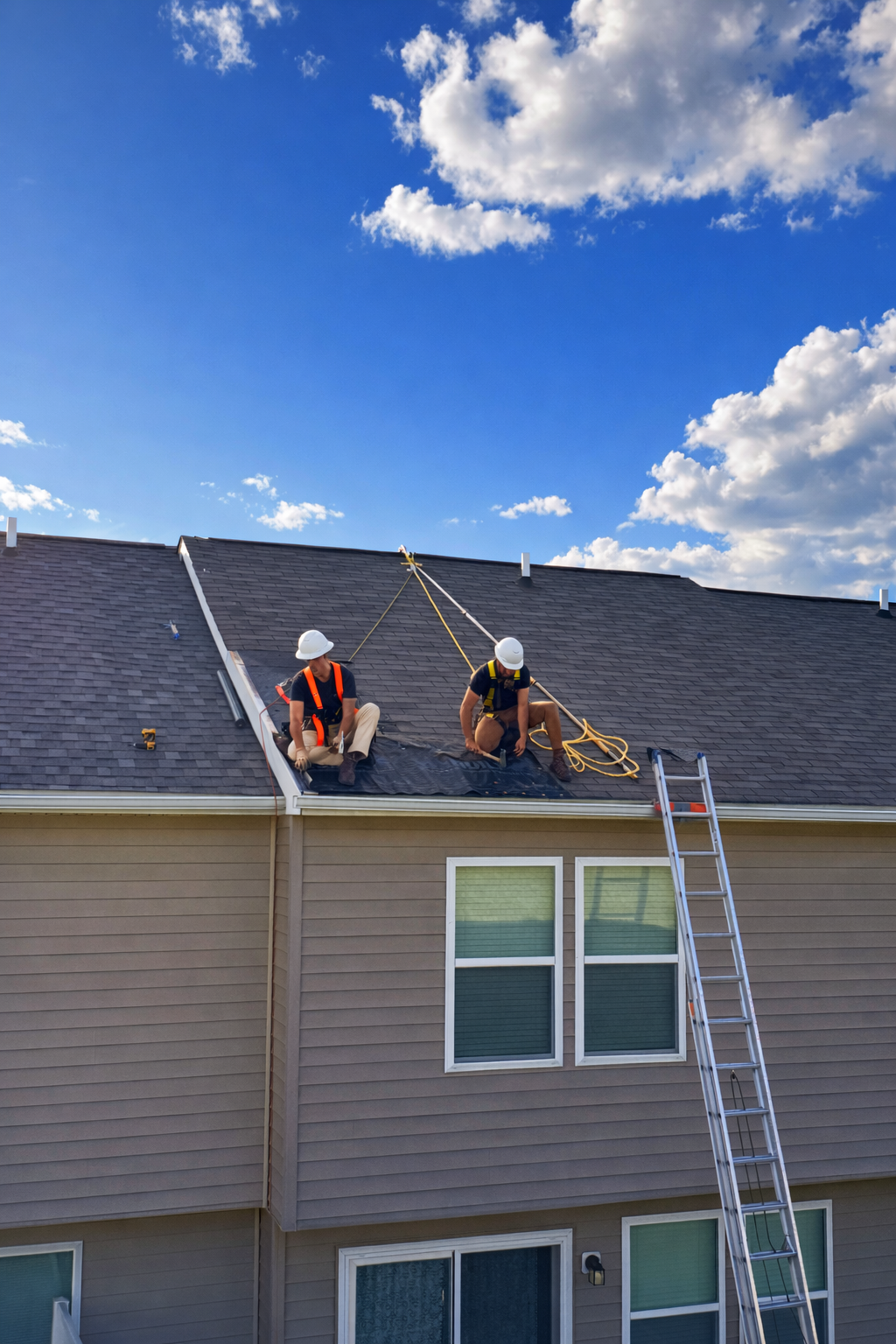
Picture this, you wake up after a strong West Virginia storm and notice water dripping through your ceiling. That sinking feeling hits fast. Your roof is damaged, your home is exposed, and now you’re expected to figure out an insurance claim on top of everything else.
We’ve worked with West Virginia homeowners for years, and we’ve seen firsthand how stressful exterior damage can be, especially when insurance is involved. Roof damage doesn’t just affect your home. It affects your finances, your schedule, and your peace of mind.
The good news is you don’t have to navigate the process alone. We’ve guided hundreds of homeowners through successful roof insurance claims across the Mountain State. Our role is simple: document damage clearly, communicate professionally, and help ensure the scope of work is properly understood during the claims process.
When a contractor with insurance-claim experience is involved early, the process is usually clearer, more efficient, and far less frustrating.
The Truth About Insurance Claims
Let’s be honest about something most people aren’t told upfront. Insurance companies are businesses. Their goal is to pay valid claims while managing costs through policy language, interpretation, and procedure. That alone can make the claims process feel complex and difficult to navigate after a loss.
In the insurance world, claims are often managed through a familiar framework sometimes described as “delay, deny, and defend.” This doesn’t mean every claim is handled unfairly, but it does mean the process relies heavily on timelines, documentation requirements, technical wording, and burden of proof. If damage isn’t identified, documented, and supported correctly, it may not be fully addressed, even when it exists.
It’s also important to understand that not all insurance companies handle claims the same way. According to the 2025 U.S. Home Insurance Study by J.D. Power, carriers such as Chubb, Amica, and Erie Insurance ranked highly for homeowner claims satisfaction, showing that claim handling practices can vary significantly between providers.
This is where many homeowners begin to run into challenges.
Insurance adjusters are responsible for reviewing a wide range of property losses and typically operate as generalists. While they are experienced in claim handling, they are not roofers or builders, and they typically have not installed the systems they are evaluating. Some forms of storm damage, especially to roofing and exterior systems, are not always obvious during a brief inspection.
At the same time, most homeowners do not speak the language of insurance or construction. They are not trained to recognize hidden damage, understand how repair scope is written, or know what is commonly reduced or excluded during an initial review.
Here’s a real example from Morgantown:
A homeowner contacted us after their carrier offered $2,587.15 for storm damage that clearly required a full roof replacement and siding repairs. They were prepared to accept it because they assumed the adjuster’s assessment was complete. After we documented the damage properly, addressed what was missed, and aligned the scope with real construction requirements, the final settlement increased to $36,835.64, enough to restore the home correctly to its pre-loss condition.
Our role is not to fight insurers or provide legal advice. Our role is to make sure damage is identified accurately, documented thoroughly, and scoped according to real construction standards. When that happens, claims tend to resolve closer to what it truly takes to fix the home the right way.
Our Proven Insurance Claims Process
When you work with Eclipse Construction, you’re partnering with a contractor experienced in navigating the insurance claim process alongside the construction work. Our role is to help ensure damage is properly identified, documented, and communicated so the scope of repairs accurately reflects what is required to restore your property.
Initial Damage Assessment & Mitigation
- We conduct a comprehensive roof inspection, documenting every area of damage
- Damage is photographed, measured, and documented using industry-standard methods and estimating platforms commonly used in insurance claims
- Temporary mitigation, such as tarping or water diversion, is provided when necessary to help prevent further damage
- You receive a clear summary outlining recommended repairs or replacement based on observed conditions
Insurance Company Contact
- We assist you in preparing the information needed to report the claim accurately
- Our team coordinates scheduling for the adjuster inspection
- A preliminary construction-based estimate is prepared using current West Virginia material and labor considerations
- Full transparency with shared documentation
Adjuster Meeting Preparation
- We schedule to meet the adjuster on-site
- Damage areas, measurements, and access points are clearly presented
- Supporting photos and documentation provided to reduce overlooked items
Claim Documentation and Submission
- Detailed reports and estimates are submitted for review
- Follow-up to confirm receipt and progress
- Technical construction-related questions are addressed as they arise
- Regular updates provided to the homeowner or business owner.
Settlement Review
- Line-by-line review of the initial settlement
- Additional documentation submitted if the scope is insufficient
- Communication with adjusters using local market and construction knowledge
- Continued follow-through until the scope reflects proper repairs
Project Completion & Finalization
- Insurance paperwork handled through completion
- Work completed to insurance and Eclipse quality standards
- Final inspections and supplements handled if additional damage is discovered
- You receive a warranty-backed roof or exterior system built to last
Timelines vary by carrier and damage complexity. In West Virginia, insurers are required to acknowledge claims within 10 working days and make payment decisions within reasonable timeframes.
Understanding Your Insurance Policy Like a Pro
Actual Cash Value (ACV) vs. Replacement Cost Value (RCV)
Actual Cash Value (ACV) generally refers to the depreciated value of damaged materials at the time of loss. In simple terms, it reflects age and wear rather than the cost of brand-new replacement.
Example: If a 12-year-old roof is damaged, ACV typically reflects what that roof was worth in its current condition, not what it would cost to install a new roof today.
Replacement Cost Value (RCV) generally refers to the cost to replace damaged materials with new materials of like kind and quality. Many policies include RCV coverage, but the process for receiving full payment often involves multiple steps and documentation.
We focus on clearly documenting damage and repair requirements so the construction scope is accurately reflected during the claim process.
Understanding Your Deductible
- Your deductible is what you pay out of pocket before insurance kicks in
- In West Virginia, deductibles commonly range from $500 to $2,500
- Some policies include separate wind or hail deductibles
- We make sure homeowners understand expected out-of-pocket costs before work starts
Coverage Limitations You Should Know
While coverage varies by policy, many claims are influenced by factors such as:
- Whether damage was sudden and accidental, such as from storms or falling debris
- Whether damage occurred over time due to wear, age, or maintenance issues
- Whether Coverage may depend on whether matching provisions apply.
- Whether upgrade requirements may or may not be included in your policy
Our role is to document observed conditions and required repairs based on current construction and industry standards.
Depreciation and How It Affects You
- Insurance payments may include depreciation that is held back initially
- Additional funds may be released after work is completed and documented
- Proper invoices, photos, and completion documentation are often required
- We provide detailed completion documentation to support the construction portion of the claim process
The Adjuster Inspection: What Really Happens
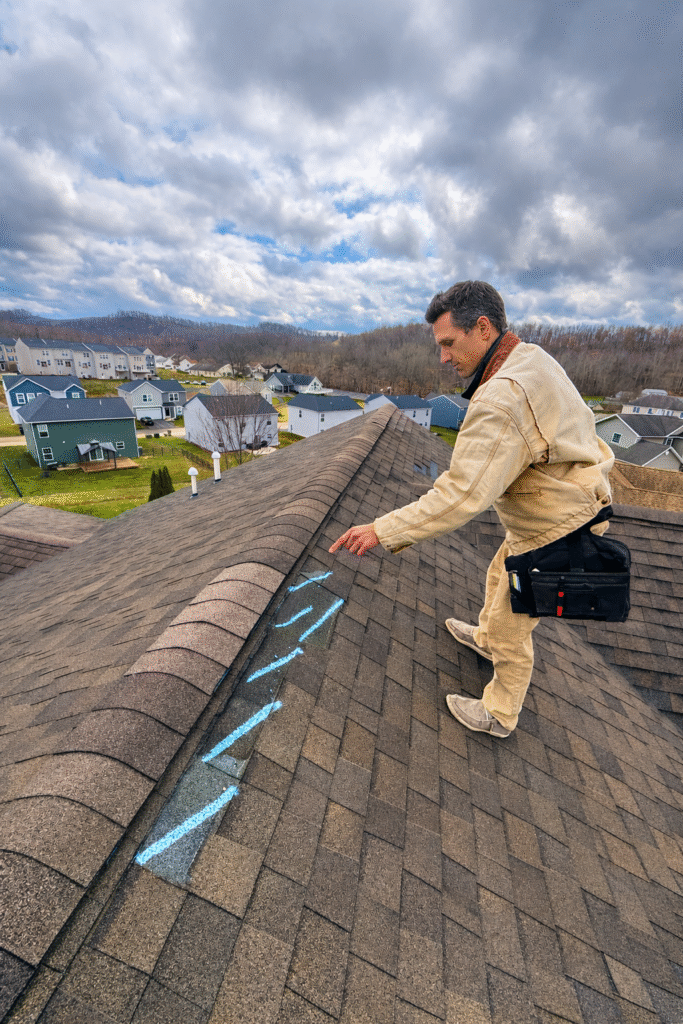
The adjuster inspection is where many claims succeed or fail. Here’s what to expect when we’re there to guide the process:
Before the Adjuster Arrives
- We document all damage with high-resolution photos and detailed measurements
- Our team prepares a comprehensive damage report to aid the adjuster during inspection
- We open up the communication lines with your insurance representatives
During the Inspection
- We accompany the adjuster on the roof to point out all damage areas
- Our team shows where damage affects the roof system’s future integrity and performance
- We provide technical expertise about repair methods and material requirements
- We ensure the adjuster documents damage that might not be obvious to untrained eyes
Common Issues We Help Prevent
- Adjusters missing hidden damage in hard-to-reach areas
- Underestimating the scope of work required for proper repairs
- Using outdated pricing or materials that don’t reflect current West Virginia market rates
- Overlooking code requirements that affect repair costs
Red Flags We Watch For
- Adjusters who seem rushed or don’t thoroughly inspect all damage areas
- Estimates that seem significantly lower than reasonable repair costs
- Adjusters who discourage contractor involvement or refuse to meet with us
- Settlement offers that arrive unusually quickly without proper documentation or review
What Happens After the Inspection
- We follow up with the adjuster to provide any additional information requested
- Our team reviews the adjuster’s report for accuracy and completeness
- We identify any discrepancies between what was observed and what’s documented
- You receive a complete summary of the inspection and our assessment of the likely outcome
Documentation That Makes a Difference in Claims
Insurance claims rely heavily on clear, consistent documentation. Proper records help ensure the scope of damage and required repairs are accurately reviewed during the claim process.
Photographic Evidence Standards
- We capture before, during, and after photos using professional-grade equipment
- Documentation includes wide-angle views for context and close-ups for specific damage
- Damage is photographed from multiple angles to show extent and severity
- Time-stamped images help establish a clear timeline of observed conditions
Detailed Damage Reports
- Reports identify each damaged component with measurements and locations
- We document how damage impacts roof performance and weather resistance
- Repair requirements are described using construction terminology commonly used in claims review
- Material types and labor requirements are clearly outlined for accurate estimating
Supporting Documentation We Gather
- Weather data confirming storm activity near the reported date of loss
- Manufacturer specifications for materials and installation requirements
- Applicable local and national building code considerations that affect repair methods
- Evidence of collateral damage to neighboring houses or property
Professional Estimates and Specifications
- Line-item estimates prepared using current regional construction pricing
- Specifications aligned with manufacturer and code requirements
- Labor considerations reflect skilled installation practices
- Estimates include disposal, permits, and code-related work where applicable
Why This Level of Documentation Matters
- Well-documented damage is less likely to be disputed during claim review
- Clear reports help ensure the full scope of repairs is considered
- Strong documentation can reduce delays and repeated inspections
- Detailed records support further review if the initial scope is incomplete
- When appropriate, moisture testing and infrared imaging may be used to help identify hidden damage not visible during a standard inspection
When Claims Get Denied or Underpaid
Not every claim moves smoothly. Delays, partial approvals, and denials are common, especially when damage is not immediately obvious or is open to interpretation. When that happens, the outcome often depends on how well the damage and repair scope are documented.
Common Reasons for Claim Denials
- Damage is attributed to wear, aging, or maintenance rather than a specific storm event
- The scope is determined not to meet coverage thresholds based on initial inspection
- Disagreements over whether damage affects roof performance or appearance
- Proposals to repair isolated areas rather than address the full affected system
These situations are often influenced by how loss details are documented and how policy language is applied during review.
Our Approach When a Claim Falls Short
- We request clear written explanations for denials or reduced scopes
- Additional documentation is gathered to clarify damage extent and repair requirements
- Supplemental inspections or third-party evaluations are coordinated when appropriate
- Information is submitted through the insurer’s established review and escalation process
Our role is to clearly present construction facts, damage conditions, and repair needs so the claim reflects the actual work required.
Examples from Real Projects in West Virginia
Just last year, we helped a homeowner in Bruceton Mills whose claim was initially denied because the adjuster said their damage was “not a covered loss.” We brought in a certified inspector who documented that all damage was consistent with a recent storm. The insurance company reversed their decision and paid the full $35,547.15 claim.
In Fairmont, we worked with homeowners whose insurance company initially proposed spot repairs rather than full replacement. Our documentation and repairability assessment showed that patching would not restore proper roof performance and would likely fail within a short timeframe due to the extent and distribution of the damage. Based on the construction findings, the final scope was revised to include a full roof replacement rather than temporary repairs.
In another case in Morgantown, a homeowner was initially approved for a minor repair totaling $379.45. During our evaluation, we identified that the missing shingles were discontinued. An ITEL analysis confirmed the material was no longer available in like kind and quality. Once this was documented and submitted, the claim was revised to $18,945.72, allowing the homeowner to replace the roof with new materials.
When to Get a Second Opinion
- When the initial settlement is significantly lower than realistic repair costs
- When inspections feel rushed or damage concerns are brushed aside
- When a claim is denied without clear, written explanations
- When visible damage is dismissed as not covered
- When the proposed repair scope does not reasonably restore the roof system
Legal Resources in West Virginia
- The West Virginia Insurance Commissioner’s office handles consumer complaints
- The Office of the WV Attorney General handles consumer rights and protections
- West Virginia law sets timelines and standards insurers must follow during claim handling
- Independent professionals, such as public adjusters or consultants, may assist with damage evaluations
- Legal counsel experienced in insurance disputes may be appropriate for complex or unresolved claims
Working with Eclipse vs. Going Solo
Some homeowners choose to manage insurance claims on their own. Here’s a practical comparison of what that typically looks like.
What Eclipse Handles for You
- Professional damage assessment using industry-standard methods
- Direct communication with insurance adjusters and claims representatives
- Comprehensive documentation that meets insurance company requirements
- Experience working through claim-related construction issues specific to West Virginia homes
- Project coordination from inspection through completed repairs
- Ongoing support and warranty-backed workmanship after construction is complete
Timeline Comparisons
- DIY claims often take 3-6 months due to back-and-forth with insurance companies
- Well-documented construction scopes typically move faster once approved
- Homeowners managing claims alone frequently encounter scope disputes or documentation gaps
- Proper preparation helps reduce avoidable delays tied to missing or unclear information
What You Still Control
- Final approval of all work before construction begins
- Material selections within policy limits and budget considerations
- Scheduling that fits your household and availability
- Direct communication about project progress and any changes
- Additional upgrades if desired
The Real Cost of Going It Alone
Beyond the time and stress involved, homeowners managing claims on their own sometimes accept settlements that don’t fully cover proper repairs. The difference isn’t just financial. It’s the confidence that your roof or exterior was repaired or replaced correctly, using appropriate materials and methods, not temporary solutions.
West Virginia Specific Considerations
Our Mountain State presents unique challenges for roof insurance claims. Here’s what we’ve learned from years of working with local conditions:
Weather Patterns That Affect Claims
- Mountain terrain can create highly localized storm damage that varies significantly from neighborhood to neighborhood
- Rapid temperature swings contribute to expansion and contraction that can worsen existing storm damage
- Heavy snow loads and ice dams may cause damage that is not immediately visible from the ground
- Spring storms often expose roof and exterior damage that accumulated during winter months
State-Specific Regulations That Help Homeowners
- West Virginia requires insurance companies to acknowledge claims within 10 working days
- State law mandates reasonable investigation timelines and payment schedules
- The Insurance Commissioner’s office provides consumer protection and complaint resolution
- Local building codes may require upgrades that insurance companies must cover
Your Preparation Checklist for Roof Damage
What you say early in the claims process matters more than most homeowners realize. Insurance companies document every statement, and those statements can later be referenced when evaluating coverage.
If you are unsure about the full extent of the damage, it is usually better to avoid guessing or making definitive claims. Damage is not always visible right away, and inspections often reveal issues that were not obvious at first.
Immediate Steps After Damage Occurs
- Prioritize your family’s safety. Do not walk on damaged roofs or enter areas with structural concerns
- If it is safe, document visible damage from the ground using clear photos and video
- Use buckets, towels, or tarps to limit interior water damage
- Contact Eclipse Construction if emergency temporary protection is needed
Information to Gather Before Calling Insurance
- Your insurance policy number
- Contractor information and contact: Eclipse Construction
- Photos of damage from multiple angles, including wide shots and close-ups
- Approximate date and time the damage occurred
What to Tell Your Insurance Company
- Report damage as soon as possible – delays can complicate claims
- Describe only what you can clearly observe. Avoid speculation
- Do not discuss repair methods or costs
- Request that an adjuster inspection be scheduled promptly
Questions to Ask Your Insurance Company
- What’s my deductible for this type of damage?
- Do I have Actual Cash Value (ACV) or Replacement Cost Value (RCV) coverage?
- What documentation do you need from me during the claims process?
- What’s the typical timeline for processing claims like mine?
- How can I access a full copy of my policy?
Common Mistakes to Avoid
- Do not suggest the damage was caused by poor install or maintenance
- Do not accept quick settlement offers without a professional assessment
- Do not sign documents you do not fully understand
- Don’t let anyone pressure you into immediate repairs before insurance approval
When to Call Eclipse Construction
The sooner you involve us, the better your claim outcome will be. We assist with emergency protection, thorough damage documentation, and clear communication with the insurance company from day one. Many homeowners tell us they wish they had called before making their first call to insurance.
Dealing with roof damage and insurance claims does not have to be overwhelming. We have guided hundreds of West Virginia homeowners through successful claims by focusing on solid documentation, professional communication, and consistent follow-through until the claim is properly resolved.
Whether you are dealing with storm damage in Charleston, hail damage in Morgantown, wind damage in Bridgeport, or Elkins, or roof issues anywhere across the Mountain State, we understand the local conditions and how they affect both roofing systems and insurance claims. We are not just contractors. We are local, and we take protecting your home and your financial interests seriously.
If you are unsure about the extent of damage or how to move forward, a second look can make all the difference. We offer free damage assessments and claim consultations with no pressure and no sales gimmicks. Just straightforward guidance from a team that works with West Virginia roofs and claims every day.Ready to get your insurance claim handled the right way? Reach out to Eclipse Construction and let us help you take the next step with clarity and confidence.