Most West Virginia homeowners don’t think about their roof until something goes wrong. A leak drips into the living room. Shingles blow off during a windstorm. Water stains appear on the ceiling. By then, what could have been a simple fix has turned into an expensive emergency.
Here’s the truth we’ve learned after years of working on roofs across West Virginia: regular maintenance is the difference between a roof that lasts 15 years and one that protects your home for well past 30 years. In a state where winters dump heavy snow, summers bring humidity and storms, and temperature swings can crack even the toughest materials, your roof faces challenges that roofs in other states simply don’t deal with.
The good news? Extending your roof’s lifespan doesn’t require a construction degree or a huge budget. It takes a seasonal checklist, a little attention, and knowing when to call in the professionals. Let us walk you through exactly what your West Virginia roof needs to stay strong, season after season.
Why West Virginia Roofs Need Extra Care
West Virginia’s climate isn’t kind to roofs. If you’ve lived here for any length of time, you already know our weather can be unpredictable and harsh. But here’s what most homeowners don’t realize: these conditions can reduce your roof’s lifespan by up to 20% if you’re not proactive about maintenance.
Our state presents unique challenges that put constant stress on roofing materials. Heavy snowfall accumulates in the higher elevations, and when that snow melts and refreezes at the roof’s edge, ice dams form. These ice dams push water under shingles and directly into your home, causing damage that often goes unnoticed until it’s extensive.
The humid summers create another problem entirely. High humidity provides the perfect environment for moss, algae, and lichen to take hold on your shingles. These organisms don’t just look bad – they trap moisture against your roofing materials and accelerate deterioration. What starts as a few dark streaks can eventually compromise your entire roof system.
Temperature swings add yet another layer of stress. A 40-degree morning can turn into a 70-degree afternoon, and these constant expansions and contractions stress your roofing materials. Over time, this thermal cycling causes premature cracking and warping that shortens your roof’s effective lifespan.
Seasonal storms bring high winds and hail that test every fastener, seal, and shingle on your roof. Wind can lift shingles, creating entry points for water. Hail can create damage you won’t notice until it’s too late. And the beautiful tree coverage that surrounds many West Virginia homes drops leaves, branches, and seeds that clog gutters and trap moisture on your roof.
We’ve seen what happens when homeowners ignore these challenges. We’ve also seen how a simple maintenance routine can add years—sometimes decades—to a roof’s life-span.
The Complete West Virginia Roof Maintenance Checklist
Different times of year require different attention. We’ve broken this down by season because your roof’s needs change as West Virginia weather changes. Following this seasonal approach ensures you’re addressing problems at the right time and preparing for what’s coming next.
Spring Maintenance (April-May)
Spring is the inspection season. After months of snow, ice, and winter storms, your roof has taken a beating. This is when you’ll discover what damage winter left behind—and catch problems before they become expensive repairs.
Your spring checklist includes:
- Inspect for winter damage by walking around your property and examining your roof from all angles
- Clean gutters thoroughly to remove all leaves, twigs, and debris that accumulated over winter
- Check all flashing around chimneys, vents, and skylights for rust, gaps, or cracked sealant
- Look for granule loss in gutters and downspouts
- Examine attic spaces for light penetration, water stains, or mold
- Trim overhanging branches to maintain at least six feet of clearance
- Schedule a professional inspection to catch early warning signs
Spring maintenance sets the foundation for the rest of the year. Problems identified now are almost always cheaper and easier to fix than if you wait until summer or fall. The mild weather also makes this the ideal time for any necessary repairs.
Summer Maintenance (June-August)
Summer in West Virginia means humidity, storms, and rapid vegetation growth. This season is about ventilation, vegetation control, and storm preparedness. The heat and moisture of summer can accelerate certain types of roof damage, so vigilance during these months pays off.
Your summer maintenance tasks:
- Check attic ventilation to ensure proper airflow and temperature control
- Inspect after every major storm for lifted shingles, dents, or debris damage
- Treat moss and algae growth before it becomes extensive
- Keep gutters clear of summer storm debris and seed pods
- Monitor for animal activity around roof vents and soffits
- Check exposed fasteners for rust or backing out
- Maintain proper drainage away from your foundation
Summer storms can be severe and sudden. After each significant weather event, take a few minutes to walk around your property and look for obvious damage. Early detection means early repair, which prevents water intrusion and more extensive damage.
Fall Maintenance (September-October)
Fall is your last chance to prepare your roof for winter. This is the most important maintenance season for West Virginia homeowners because winter weather is unforgiving. Everything you do in fall directly impacts how well your roof performs during the harshest months.
Here’s what needs to happen before the first snow:
- Complete final gutter cleaning after leaves have fallen
- Secure any loose or lifted shingles
- Inspect and reseal around flashing, vents, and chimneys
- Remove all leaves and debris from the roof surface
- Check attic insulation for adequate coverage
- Trim back vegetation one final time
- Document your roof’s condition with photographs
Fall preparation is non-negotiable. Clogged gutters in winter lead to ice dams and water damage. Loose shingles catch winter wind and tear completely off. Missing sealant allows water infiltration during freeze-thaw cycles. The time you invest in fall maintenance directly translates to fewer problems and lower costs during winter.
Winter Maintenance (November-March)
Winter maintenance is different. You’re not doing preventive work—you’re monitoring and responding to conditions as they develop. Safety becomes the primary concern during these months, so most winter maintenance involves observation rather than hands-on work.
Your winter checklist:
- Keep an eye on the amount of snow build up and consider snow removal when depth exceeds 6”
- Watch for ice dam formation at roof edges
- Check for leaks after every storm
- Keep vents clear of snow and ice
- Monitor from the ground using binoculars
- Document any storm damage immediately
Never climb on your roof in winter. Ice, snow, and cold temperatures make roof work extremely dangerous. If you notice problems that require immediate attention, call professionals who have the proper equipment and training to work safely in winter conditions.
Understanding Roof Damage: Common Issues by Season
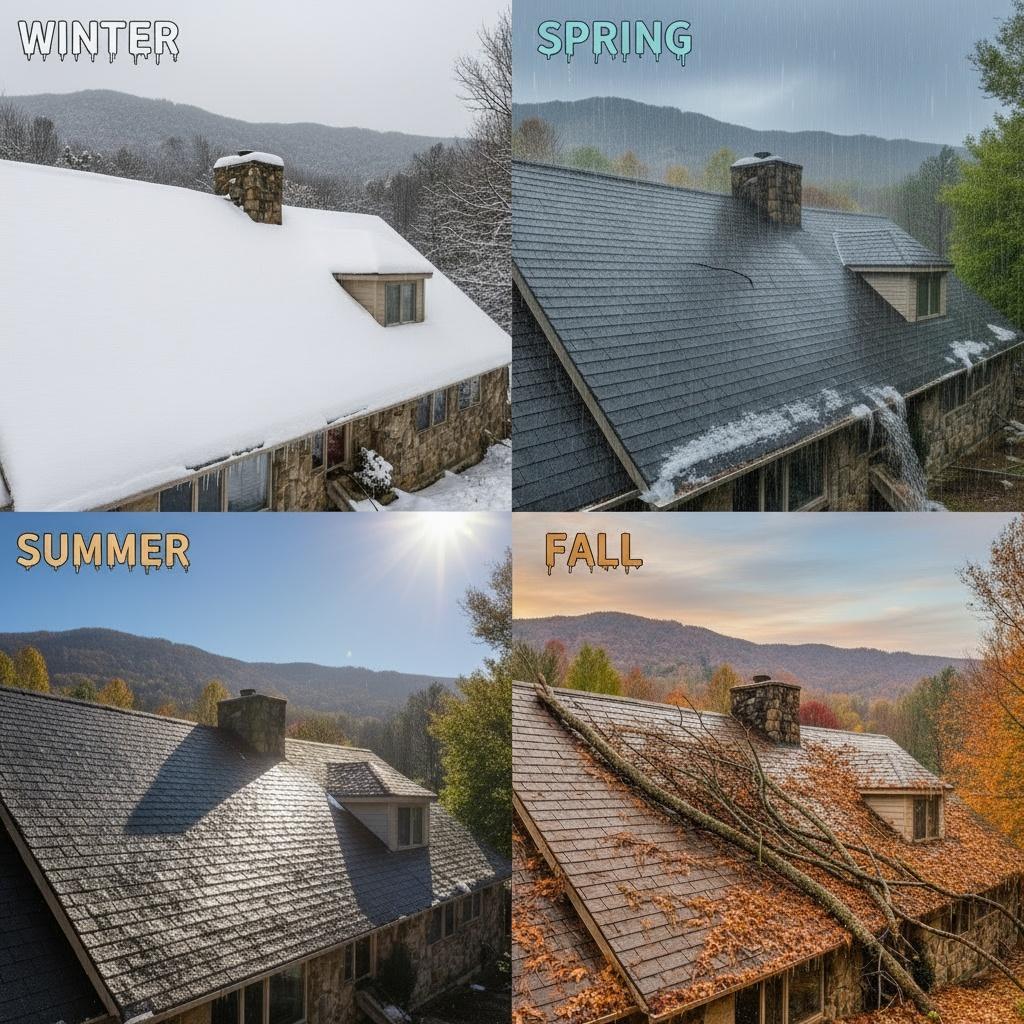
Different seasons bring different challenges. Understanding what to look for and when helps you stay ahead of problems before they become emergencies.
| Season | Common Issues | Primary Causes | Prevention Strategy |
| Spring | Shingle damage, flashing leaks, granule loss | Winter ice/snow damage, freeze-thaw cycles | Thorough inspection, immediate repairs, gutter cleaning |
| Summer | Moss/algae growth, storm damage, ventilation problems | High humidity, severe weather, heat buildup | Regular inspections after storms, vegetation treatment, ventilation checks |
| Fall | Debris accumulation, animal intrusion, loose shingles | Falling leaves, nesting animals, wind | Complete cleaning, securing loose materials, trimming trees |
| Winter | Ice dams, snow load stress, leak development | Heavy snow, temperature fluctuations, poor insulation | Snow removal, ice dam prevention, monitoring from ground |
This seasonal pattern repeats year after year. By understanding what’s coming and preparing accordingly, you can address most problems before they cause serious damage.
Professional Inspections: What to Expect
You might be thinking, “Can’t I just handle all this myself?” Some of it, yes, but here’s why professional inspections matter: we’ve inspected thousands of roofs and our training and experience allow us to identify early warning signs that untrained eyes miss.
We recommend twice-yearly professional inspections—once in spring to assess winter damage, and once in fall to prepare for winter. If your roof is over 15 years old or you’ve had recent storm damage, you might need more frequent checks.
What Eclipse Construction looks for during inspections:
During every inspection, we carefully examine the entire roofing system, not just the surface. We check shingles, seals, and penetrations, and we look closely at the roof deck for sagging, soft spots, or wear patterns that may indicate hidden issues.
In the attic, we assess ventilation, insulation, and any signs of moisture or pest activity, since these factors can affect the roof’s lifespan. We also check gutters and drainage to confirm that water flows properly and moves away from the foundation.
After the inspection, we provide a clear explanation of our findings. If maintenance or repairs are needed, we outline what’s required and why. If the roof is in good condition, we document that as well. Our goal is to help homeowners understand the current state of their roof and make informed decisions about its care.
The cost of inspection vs. the cost of major repairs:
A professional roof inspection costs a fraction of what major repairs or early roof replacement can run. We’ve seen homeowners spend more than $10,000 fixing issues that could have been caught early with a $200 inspection and a small repair. Preventive care almost always costs less than damage control.
Last winter in Morgantown, a homeowner called us after ignoring a small water stain for six months. By the time we arrived, the leak had spread through the roof deck, ruined insulation, and caused mold inside the walls. What started as a $300 fix turned into an $5,000 project. Regular inspections help catch those small problems before they become expensive ones.
Warning Signs You Need Immediate Attention
Between your seasonal maintenance checks, keep an eye out for these red flags. If you notice any of these, don’t wait for your next scheduled inspection—call a professional immediately.
- Missing or damaged shingles expose your roof deck to water damage
- Excessive granule loss indicates rapid shingle deterioration
- Sagging areas signal structural problems requiring emergency assessment
- Water stains on ceilings or in your attic mean active leaks
- Moss or algae growth holds moisture and accelerates deterioration
- Damaged or missing flashing creates the most common leak points
- Daylight visible through your attic indicates gaps letting in water and air
- Sudden increase in energy bills suggests insulation or ventilation problems
Each of these warning signs represents a problem that’s actively getting worse. Water damage spreads. Structural issues compound. What’s a small problem today becomes a major expense tomorrow. When you see these signs, act immediately.
DIY vs. Professional Maintenance: Know Your Limits
We believe in empowering homeowners to take care of their property. Some maintenance tasks are perfectly safe and appropriate for DIY. Others? Not so much. Understanding the difference keeps you safe and protects your roof from well-intentioned but improper repairs.
What homeowners can safely do themselves:
You can handle visual inspections from the ground using binoculars. You can clean your gutters if you’re comfortable on a ladder and follow safety protocols. You can trim back tree branches or hire a tree service. You can check your attic for signs of leaks or ventilation problems. You can remove light debris from your roof using a roof rake from the ground.
These tasks don’t require specialized knowledge or equipment, and they make a real difference in your roof’s longevity. Regular attention to these basics prevents many common problems.
When to call the professionals:
There are situations where it’s best to let an experienced roofing professional handle the work instead of trying to do it yourself. Some jobs require specialized equipment, training, or safety precautions that go beyond a standard inspection.
You should call a professional when:
- The work involves walking on your roof, especially if it’s steep or high.
- Repairs are needed, even minor ones, since small mistakes can cause bigger problems later.
- Moss or algae need to be treated, as using the wrong products can damage your shingles.
- Flashing, sealants, or roof penetrations need attention, which require proper materials and installation.
- You’re not completely sure what you’re looking at or how to fix it safely.
Professional inspections and repairs help prevent damage, protect warranties, and keep your roof performing the way it should.
Safety considerations:
Roofing is one of the most dangerous home maintenance activities. Every year, homeowners are seriously injured or killed in falls from roofs and ladders. Professional roofers have the training, equipment, and insurance to work safely at heights. We have harnesses, proper footwear, and years of experience navigating steep, slippery surfaces.
If you’re not completely comfortable working on your roof, it’s best not to take the risk. The cost of a professional inspection or repair is small compared to a hospital bill—or something worse. Your safety is worth far more than the money you might save attempting dangerous work yourself.
How Maintenance Extends Your Roof’s Lifespan
Let’s talk numbers, because the return on investment for regular maintenance is impressive. Understanding the financial impact helps put maintenance costs in perspective.
Average West Virginia roof lifespan with vs. without maintenance:
A typical asphalt shingle roof in West Virginia lasts about 15 to 20 years without maintenance. With seasonal care and professional inspections, that same roof can last 25 to 30 years or more. That’s an extra decade of use before you have to plan for a major roof replacement.
The ROI of regular maintenance:
Let’s do the math. Spending a few hundred dollars each year on inspections and small repairs can prevent thousands in future expenses. A full roof replacement on an average West Virginia home costs $12,000-$20,000. Extending your roof’s life by just five years through maintenance can save thousands while reducing the risk of leaks and water damage.
How small repairs prevent major replacements:
We’ve seen it time and time again. Spending a few hundred dollars on small repairs can prevent thousands in damage later. Resealing shingles for around $300 can stop leaks that would otherwise cause $5,000 or more in interior water damage. Repairing flashing or replacing worn sealant early can prevent structural rot, ruined insulation, and costly ceiling repairs.
The small fixes you make today protect your roof, your home, and your budget tomorrow. Maintenance isn’t just upkeep — it’s a smart investment that keeps small issues from turning into major expenses.
Maintenance Cost vs. Replacement Cost Analysis
Understanding the financial impact of maintenance helps you make informed decisions about your roof care budget. The numbers clearly demonstrate that prevention is always more affordable than replacement.
| Maintenance Approach | Annual Cost | 10-Year Total | Expected Roof Lifespan | Long-Term Savings |
| No Maintenance | $0 | $0 | 15-20 years | -$0 (premature replacement) |
| Basic DIY Only | $100-200 | $1,000-2,000 | 18-22 years | $3,000-5,000 |
| Professional Maintenance | $400-600 | $4,000-6,000 | 25-30 years | $8,000-12,000 |
| Premium Maintenance Program | $600-800 | $6,000-8,000 | 30+ years | $12,000-18,000 |
These figures assume an average roof replacement cost of $15,000-20,000 for a typical West Virginia home. The savings come from extending your roof’s lifespan and avoiding emergency repairs that cost significantly more than planned maintenance.
A homeowner in Fairmont called us after noticing a small leak in their bedroom ceiling. They’d been meaning to have their roof inspected but kept putting it off. By the time we got there, water had been slowly seeping in for months. The damage extended beyond the roof into the drywall, insulation, and even some electrical wiring. The total repair cost was over $5,500. An inspection six months earlier would have caught the problem when it was a simple flashing repair.
Eclipse Construction’s Maintenance Approach
At Eclipse Construction, we’ve been maintaining and replacing roofs across West Virginia for years. We’ve seen every type of roof, every kind of damage, and every climate challenge our state can throw at a home. This experience shapes how we approach every maintenance visit.
Our maintenance services include:
We provide comprehensive roof inspections that examine every component of your roofing system, from shingles to structure, gutters to ventilation. After every inspection, you get honest, detailed reporting with a clear explanation of your roof’s condition, what needs attention now, and what to watch for in the future.
We can handle minor repairs and preventive work during our inspection visit, saving you time and preventing problems from growing. We offer seasonal maintenance programs with scheduled visits that ensure your roof gets the attention it needs at the right times of year. After severe weather, we provide storm damage assessment and help you document damage for insurance claims.
TAMKO warranty protection:
We’re TAMKO-certified, which means when we install or work on your roof, you get the backing of one of the industry’s most respected manufacturers. Our TAMKO warranty coverage gives you peace of mind that your investment is protected. Whether it’s a roof replacement or maintenance work, we stand behind our craftsmanship and the materials we use.
What sets us apart:
We serve all areas within West Virginia, from Morgantown to Charleston, Martinsburg to New Martinsville, and everywhere in between. We understand the unique challenges each region faces—the heavier snow loads in the mountains, the humidity in the valleys, the wind exposure on hilltops. We’re not just roofing contractors; we’re your neighbors who understand West Virginia weather because we live in it too.
We don’t believe in high-pressure sales tactics or unnecessary upselling. If your roof needs work, we’ll tell you exactly what and why. If it’s in good shape, we’ll tell you that too. Our reputation is built on honesty, quality work, and treating every home like it’s our own.
After years of working on roofs across West Virginia, we’ve learned that the best customer is an informed customer. That’s why we take time to explain what we find, answer your questions, and help you make the best decisions for your home and budget. We’re here for the long term, and we want your roof to be too.
Creating Your Personal Maintenance Schedule
Now that you understand what needs to be done and when, it’s time to create a maintenance schedule that works for your specific situation. Not every roof requires the same level of attention, and factors like age, material, and location all play a role in determining your maintenance needs.
Factors that influence your maintenance schedule:
The age of your roof is the primary consideration. Roofs under 10 years old typically need less frequent attention—annual professional inspections and basic seasonal maintenance are usually sufficient. Roofs between 10-15 years old benefit from twice-yearly professional inspections and more vigilant seasonal maintenance. Roofs over 15 years old require the most attention, with twice-yearly professional inspections and careful monitoring between visits.
Your home’s location within West Virginia also matters. Properties in higher elevations with heavier snow loads need more winter preparation and monitoring. Homes surrounded by heavy tree coverage require more frequent gutter cleaning and debris removal. Properties in areas prone to high winds need more frequent checks of shingles and flashing.
The type of roofing material affects maintenance requirements as well. Asphalt shingles, the most common roofing material in West Virginia, follow the seasonal schedule we’ve outlined. Metal roofing requires less frequent maintenance but still needs regular inspections of fasteners and sealants. Other specialty materials may have unique maintenance requirements.
Setting up reminders and staying consistent:
The best maintenance schedule is one you actually follow. Set calendar reminders for each seasonal maintenance period. Many homeowners find it helpful to tie roof maintenance to other seasonal activities—clean gutters when you rake leaves, inspect after winter when you’re doing spring yard work, check before winter when you’re preparing your home for cold weather.
Consider joining a professional maintenance program that schedules inspections automatically. This removes the burden of remembering and ensures you never miss critical maintenance periods. Eclipse Construction offers maintenance programs tailored to West Virginia homeowners, with scheduled visits that align with our state’s seasonal challenges.
Common Maintenance Mistakes to Avoid
Even well-intentioned homeowners sometimes make mistakes that can damage their roof or create safety hazards. Understanding these common pitfalls helps you avoid them.
Using pressure washers on shingles:
Pressure washers seem like an efficient way to clean your roof, but they’re actually one of the worst things you can use. The high-pressure water stream blasts away the protective granules on your shingles, significantly shortening their lifespan. It can also force water under shingles and into your home. If your roof needs cleaning, use gentle methods or hire professionals who know how to clean without causing damage.
Walking on your roof improperly:
If you must walk on your roof, do it correctly. Walk on the balls of your feet, not your heels, to distribute weight more evenly. Stay on the flatter sections and avoid steep slopes. Never walk on a wet, icy, or frost-covered roof. Wear proper footwear with good traction. Better yet, avoid walking on your roof altogether and use binoculars for inspections or hire professionals.
Ignoring small problems:
The biggest maintenance mistake is seeing a small problem and deciding to “keep an eye on it” instead of fixing it immediately. Small problems never stay small. That slightly lifted shingle will catch wind and tear off completely. That tiny leak will spread and cause extensive water damage. That small patch of moss will grow and deteriorate your entire roof. When you spot a problem, address it right away.
Using the wrong repair materials:
Not all roofing products are created equal, and using the wrong sealant, patch, or repair material can cause more harm than good. Some products aren’t compatible with certain roofing materials. Others don’t hold up to West Virginia weather. If you’re attempting DIY repairs, research the correct products for your specific roof type, or better yet, let professionals handle repairs.
Neglecting gutters:
Your gutters are part of your roofing system, not a separate component. Clogged gutters cause water to back up under shingles, leading to rot, leaks, and ice dams. Many homeowners focus on the roof surface but ignore the gutters, then wonder why they’re experiencing water damage. Clean gutters are essential to a healthy roof.
The Connection Between Attic Health and Roof Longevity
Your attic plays a crucial role in your roof’s performance and lifespan. Many roof problems actually start in the attic, not on the roof surface. Understanding this connection helps you maintain both effectively.
Proper ventilation prevents moisture buildup:
Adequate attic ventilation allows air to circulate, preventing heat and moisture accumulation. In summer, poor ventilation causes your attic to become superheated, which can warp roof decking and prematurely age shingles. In winter, poor ventilation traps moisture that can condense on cold surfaces, leading to mold, rot, and ice dam formation.
Your attic should have both intake vents (usually in the soffits) and exhaust vents (at or near the roof peak). Air should flow in through the intake vents, circulate through the attic space, and exit through the exhaust vents. If your attic feels significantly hotter than the outside temperature in summer or shows signs of moisture in winter, you likely have ventilation problems.
Insulation quality affects roof performance:
Proper attic insulation keeps conditioned air inside your living space and prevents heat transfer to your attic. In winter, inadequate insulation allows heat to escape into your attic, warming the roof deck and causing snow to melt. That melted snow runs down to the cold roof edge and refreezes, creating ice dams.
Check your attic insulation depth and coverage. Most West Virginia homes should have at least 10-12 inches of insulation covering the attic floor. The insulation should be evenly distributed with no gaps or compressed areas. If you can see the tops of your floor joists, you need more insulation.
Signs of attic problems:
During your seasonal maintenance, always check your attic for warning signs. Look for water stains on the underside of the roof deck or on rafters. Check for mold or mildew growth, which indicates moisture problems. Feel for dampness or condensation on surfaces. Look for daylight coming through gaps or holes. Notice any musty odors that suggest moisture or mold.
These attic problems directly impact your roof’s health and lifespan. Addressing them is just as important as maintaining the roof surface itself.
Storm Damage: Assessment and Response
West Virginia experiences various types of severe weather throughout the year. Knowing how to assess and respond to storm damage protects your home and ensures you don’t miss damage that could worsen over time.
After high winds:
Wind damage isn’t always obvious from the ground. After storms with high winds, look for missing, lifted, or creased shingles. Check for damage to roof vents, ridge caps, and flashing. Look in your yard for shingle granules or pieces of roofing material. Even if you don’t see obvious damage, consider scheduling a professional inspection after severe wind events.
After hail storms:
Hail damage can be difficult to spot because it doesn’t always cause immediate leaks. Hail impacts create bruises in shingles that compromise their integrity and shorten their lifespan. Look for dents in metal roof components like vents, flashing, and gutters. Check for excessive granule loss. Hail damage often requires professional assessment because the full extent isn’t visible to untrained eyes.
After heavy snow or ice:
Monitor your roof during and after heavy snow accumulation. Look for sagging or unusual stress patterns. Watch for ice dam formation at roof edges. After the snow melts, inspect for any damage caused by the weight or ice movement. Check your attic for signs of water intrusion.
Documenting damage for insurance claims:
If you suspect storm damage, document everything immediately. Take clear photos from multiple angles showing the damage. Note the date and type of storm that caused the damage. Keep records of any emergency repairs you make to prevent further damage. Contact your insurance company promptly and schedule a professional inspection to assess the full extent of damage.
Many insurance policies have time limits for filing claims after storm damage. Don’t wait weeks or months to report damage, even if it seems minor. What looks like a small problem might be part of more extensive damage that requires professional assessment.
Frequently Asked Questions
Q: How often should I have my roof professionally inspected in West Virginia?
A: We recommend twice-yearly professional inspections for most West Virginia homes – once in spring after winter weather and once in fall to prepare for winter. If your roof is over 15 years old, has experienced recent storm damage, or you’ve noticed any warning signs, you may need more frequent inspections. These regular checkups catch small problems before they become expensive repairs and help extend your roof’s lifespan significantly.
Q: Can I perform roof maintenance myself, or should I always hire professionals?
A: You can safely handle some maintenance tasks yourself, including ground-level visual inspections with binoculars, gutter cleaning (if comfortable on a ladder), checking your attic for signs of problems, and removing light debris with a roof rake from the ground. However, you should always hire professionals for anything requiring walking on your roof, any repair work, moss or algae treatment, and anything involving flashing or sealants. Roofing work is dangerous, and improper repairs often cause more damage than the original problem.
Q: What’s the biggest mistake West Virginia homeowners make with roof maintenance?
A: The biggest mistake is waiting until there’s a visible problem before taking action. By the time you see a leak or obvious damage, the problem has usually been developing for months or even years. Regular preventive maintenance catches issues early when they’re simple and inexpensive to fix. We’ve seen countless situations where a $300 repair became a $4,000+ problem simply because the homeowner waited too long to address it.
Q: How do I know if my roof needs to be replaced or just repaired?
A: Several factors determine whether repair or replacement is the better option. If your roof is approaching or past its expected lifespan (typically 20-25 years for 3-tab asphalt shingles), replacement is usually more cost-effective than extensive repairs. If damage is widespread rather than localized, replacement makes more sense. If you’re experiencing multiple leaks in different areas or seeing significant granule loss across the entire roof, replacement is likely necessary. A professional inspection can assess your roof’s overall condition and provide honest recommendations about repair versus replacement.
Q: What causes ice dams, and how can I prevent them?
A: Ice dams form when heat escapes from your home into the attic, warming the roof deck and melting snow. The melted water runs down to the cold roof edge and refreezes, creating a dam that prevents proper drainage. Water backs up behind this ice dam and seeps under shingles. Prevention involves three key elements: proper attic insulation to keep heat inside your living space, adequate attic ventilation to maintain consistent roof temperature, and keeping gutters clean so water can drain properly. If you regularly experience ice dams, you likely have insulation or ventilation problems that need to be addressed.
Q: How much does roof maintenance typically cost in West Virginia?
A: Costs vary depending on your roof’s size, age, and condition, but typical maintenance expenses include $150-300 for professional inspections, $100-200 for gutter cleaning, $300-800 for minor repairs like flashing or shingle replacement, and $300-600 for moss or algae treatment. Annual maintenance programs that include inspections and minor preventive work typically cost $400-600 per year. While these costs might seem significant, they’re a fraction of what you’ll pay for major repairs or premature roof replacement. Regular maintenance is an investment that pays for itself many times over.
Q: Does homeowners insurance cover roof maintenance?
A: Standard homeowners insurance typically doesn’t cover routine maintenance or wear-and-tear issues. However, insurance usually covers sudden, accidental damage from storms, falling trees, or other covered events. This is why regular maintenance is so important—it prevents the gradual deterioration that insurance won’t cover. If you experience storm damage, document it immediately and file a claim promptly. Regular maintenance records can actually help with insurance claims by demonstrating that you’ve properly cared for your roof and that damage resulted from a specific event rather than neglect.
Q: What’s the best time of year to schedule major roof repairs in West Virginia?
A: Late spring through early fall offers the best conditions for roof work in West Virginia. Temperatures are moderate, weather is more predictable, and roofing materials perform best during installation in these conditions. However, if you discover damage that’s causing active leaks, don’t wait for ideal weather—emergency repairs are necessary regardless of season. For planned maintenance and non-urgent repairs, schedule work during the warmer months when contractors have more flexibility and materials cure properly.
Q: How do I choose a reputable roofing contractor for maintenance and repairs?
A: Look for contractors with proper licensing and insurance, established local presence and reputation, manufacturer certifications (like our TAMKO certification), clear written estimates and contracts, and references from recent customers. Avoid contractors who pressure you to make immediate decisions, require full payment upfront, or can’t provide proof of insurance. A reputable contractor will thoroughly inspect your roof, explain what they find, provide honest recommendations, and stand behind their work with solid warranties.
Q: Will regular maintenance really extend my roof’s lifespan that much?
A: Absolutely. We’ve seen it time and time again over years of working on West Virginia roofs. A typical asphalt shingle roof without maintenance lasts 15-20 years in our climate. The same roof with regular seasonal maintenance and professional inspections can last 25-30 years or more. That’s an extra decade of protection before you need to budget for replacement. The key is consistency—occasional maintenance helps, but following a regular seasonal schedule provides the maximum benefit and return on investment.
Protecting Your Investment, Season by Season
Your roof is one of your home’s most important investments. It protects everything inside—your family, your belongings, your memories. In West Virginia, where weather can be harsh and unpredictable, that protection requires attention and care.
The good news is that extending your roof’s lifespan doesn’t require constant worry or huge expenses. It requires a seasonal routine, attention to warning signs, and knowing when to call in professional help. Follow the maintenance checklist we’ve outlined, schedule regular professional inspections, and address small problems before they become big ones.
Think of roof maintenance like changing the oil in your car. Skip it, and you might be fine for a while. But eventually, that neglect catches up with you in expensive, preventable ways. A few hours and a few hundred dollars each year can add a decade or more to your roof’s life—and save you thousands in premature replacement costs.
We’ve walked countless West Virginia homeowners through this process. We’ve seen the difference that regular maintenance makes. We’ve also seen the heartbreak and expense when maintenance is ignored. The choice is yours, but we’re here to help you make the right one.
Whether you’re dealing with storm damage, planning ahead with preventive maintenance, or just want an expert opinion on your roof’s condition, Eclipse Construction is ready to help. We’ll walk your roof, identify any concerns, and give you honest recommendations—no high-pressure sales pitch, no unnecessary upselling. Just straight talk about what your roof needs and how we can help you protect your home for years to come.
Ready to protect your investment? Eclipse Construction offers thorough roof inspections across West Virginia. We’ll assess your roof’s condition, explain exactly what we find, and help you create a maintenance plan that fits your home and budget. Our TAMKO certification and years of experience mean you’re getting quality service backed by industry-leading warranties. Schedule your free inspection today and take the first step toward a longer-lasting, better-performing roof.