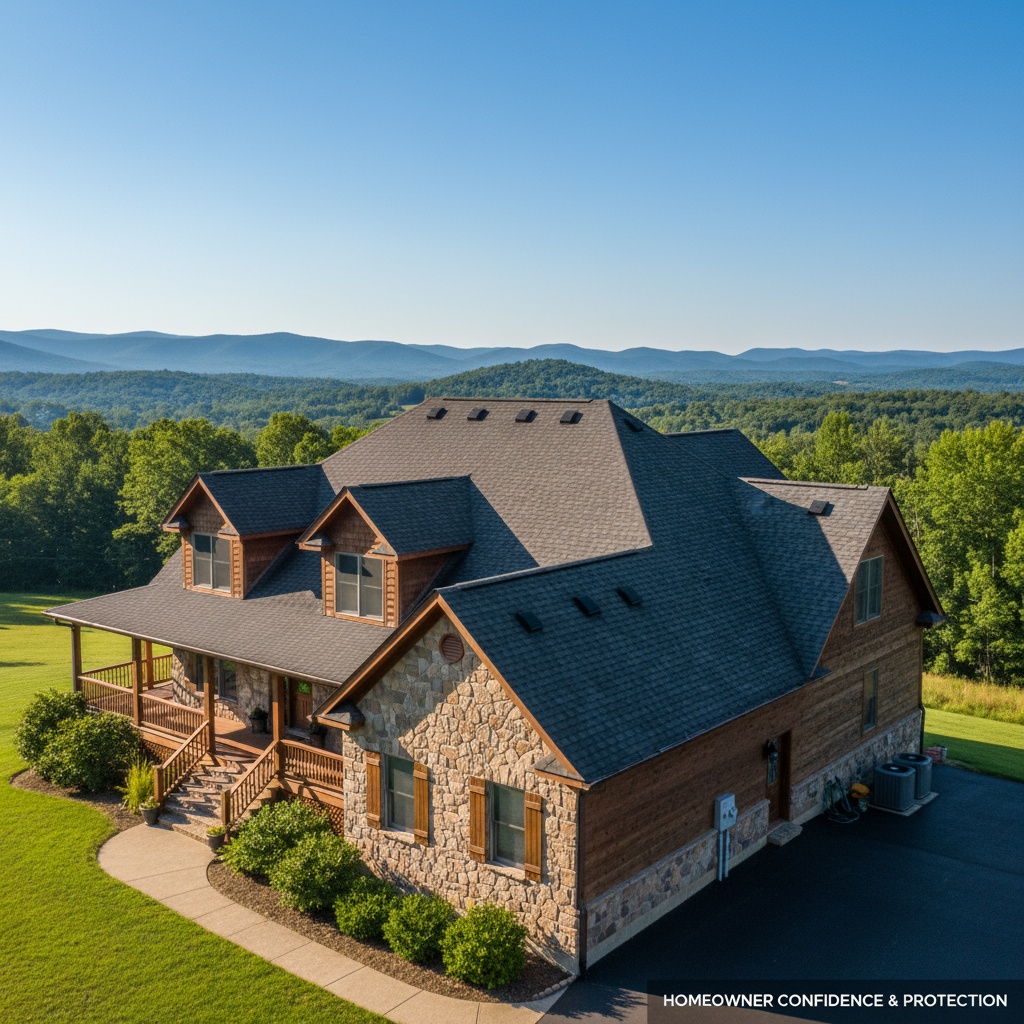
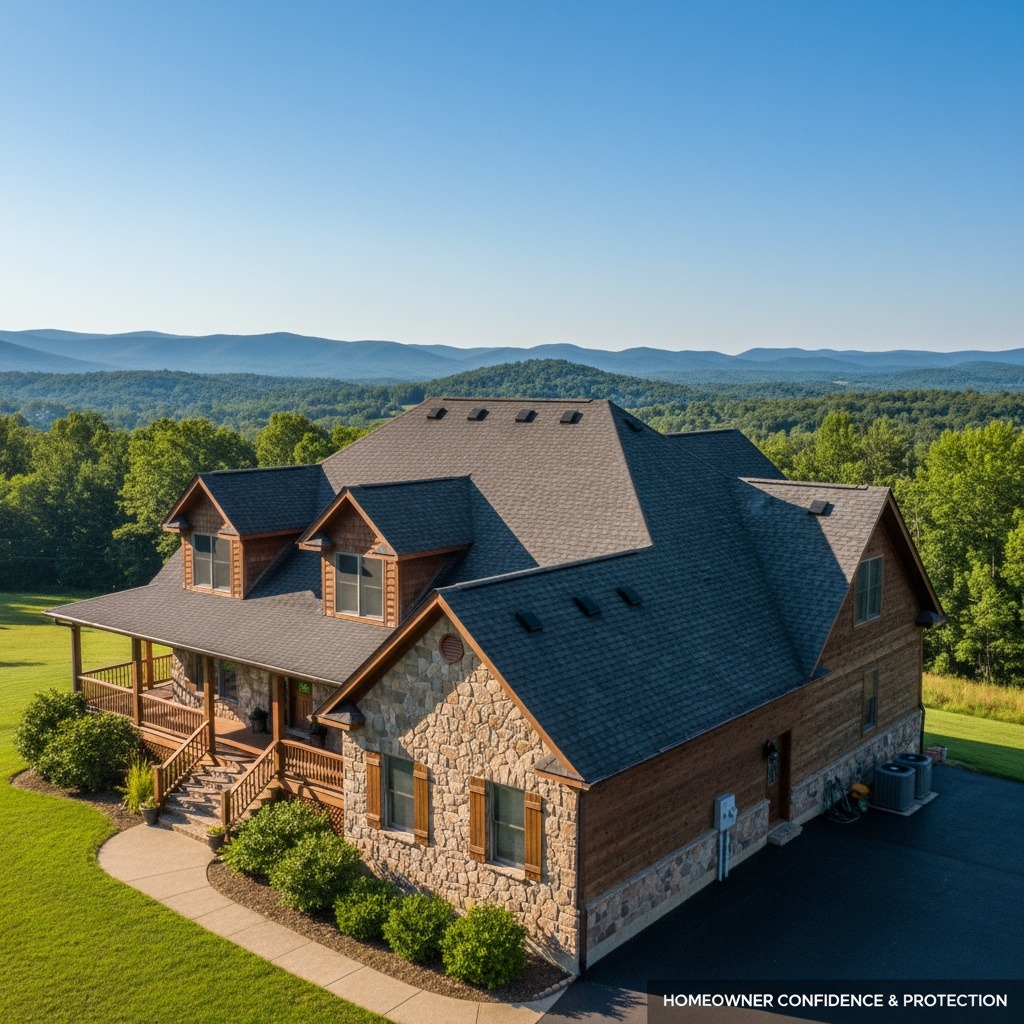
Picture this: It’s mid-July in Morgantown, and your upstairs bedrooms feel like a sauna even though the AC is running full blast. Or maybe it’s February, and you’re watching icicles form along your roof edge while your neighbor’s roof stays clear. What’s the difference? Often, it comes down to something most homeowners never think about: roof ventilation.
Roof ventilation plays a critical role in protecting your home year-round. It regulates attic temperature, manages moisture, extends roof lifespan, and helps reduce energy costs. In West Virginia, where homes face humid summers, freezing winters, and wide seasonal swings, proper ventilation is not optional, it is essential.
What Is Roof Ventilation, Really?
Think of roof ventilation as your roof’s breathing system. Just like your home needs windows that open for fresh air, your attic needs a way for air to flow through continuously. It’s surprisingly simple:
The Basic Components:
- Intake vents (usually soffit vents): These sit along the underside of your roof’s overhang, pulling cool air into the attic space from outside
- Exhaust vents (ridge vents, box vents, or gable vents): These sit near or at the roof’s peak, allowing hot air to escape naturally
- The flow: Cool air enters through the soffits, travels up through the attic space, and exits through the exhaust vents at the top, creating continuous airflow
- Natural convection: This system works without electricity because hot air naturally rises, pulling cooler air in behind it
Here’s what most homeowners don’t realize: Ventilation isn’t just about letting hot air out during summer. It’s a year-round system that manages moisture and protects your roof structure from the inside out. When balanced properly, air flows through your attic space and cycles completely about three times per hour, carrying away excess heat and moisture before they can cause problems.
Why West Virginia Homes Need Proper Ventilation
Climate Challenges by Season:
| Season | Temperature Impact | Ventilation Challenge | Potential Damage |
| Summer | Attics reach 150°F+ when outside temp is 85°F | Trapped heat and humidity | Shingle deterioration, insulation damage, high energy bills |
| Winter | Warm air heats roof deck unevenly | Ice dam formation from melt-refreeze cycles | Water leaks, gutter damage, interior ceiling damage |
| Spring/Fall | Temperature swings (40°F to 70°F) | Condensation from warm air hitting cold surfaces | Wood rot, mold growth, insulation compression |

What Eclipse Construction Sees Across West Virginia:
- Shingles failing 5 to 7 years earlier than expected
- Mold growth on roof decking in homes less than 10 years old
- Ice dams that cause roof leaks and interior damage
- Energy bills 15-20% higher than comparable homes with proper ventilation
- Moisture-damaged insulation
The Hidden Problems of Poor Ventilation
Ventilation problems often remain hidden until damage becomes expensive.
Six Major Problems Caused by Poor Ventilation:
1. Moisture buildup and mold growth:
Warm, humid air trapped in the attic condenses on cooler surfaces such as roof decking and rafters. Over time, this moisture supports mold growth.
2. Premature roof deterioration:
Excess attic heat accelerates shingle aging, causing cracking, curling, and granule loss well before expected lifespan.
3. Ice dams in winter:
Heat escaping into the attic melts snow unevenly. Meltwater refreezes at roof edges, forming ice dams that force water under shingles.
4. Higher energy bills:
A superheated attic radiates heat into living spaces, increasing cooling costs in summer and heat loss in winter, typically 20% higher costs.
5. Insulation damage:
Moist insulation loses effectiveness. Fiberglass insulation can lose up to 50% of its R-value when damp.
6. Wood rot in roof decking:
Continuous moisture exposure causes the plywood or OSB roof decking to rot. By the time this becomes visible from inside your home, the damage is extensive. Replacing rotted decking can add thousands to the project cost. This is far more than installing proper ventilation would have cost in the first place.
Warning Signs of Inadequate Ventilation
Most homeowners never go into their attic, so ventilation problems go unnoticed. But your home gives you clues if you know what to look for.
Warning Signs Checklist:
✓ Attic feels like a sauna in summer (140°F or hotter)
✓ Ice dams forming on roof edges in winter
✓ Mold or mildew smell in upper-floor rooms or attic
✓ Curling or cracked shingles (especially on roofs less than 15 years old)
✓ Peeling paint on soffits or exterior walls
✓ Rust on metal fixtures in attic (nails, straps, junction boxes)
✓ Water stains on attic wood (especially during winter months)
✓ Higher-than-expected energy bills compared to similar-sized homes
If you’re seeing any of these signs, it’s worth having your ventilation system inspected. Catching problems early prevents the expensive damage that comes from years of inadequate airflow.
Types of Roof Vents We Install
Not all ventilation systems are created equal, and what works best depends on your roof design, attic size, and specific needs.
Ventilation System Comparison:
| Vent Type: | Location: | Best For: | Benefits: |
| Ridge Vents | Roof peak | Most standard gable/hip roofs | Continuous exhaust, barely visible, even airflow |
| Soffit Vents | Roof overhang underside | Intake for all systems | Continuous intake, works with natural convection |
| Box Vents | Near roof ridge | Complex roof lines, multiple levels | Reliable, cost-effective, visible placement |
| Gable Vents | Gable end walls | Supplemental ventilation | Easy to install |
| Power Attic Fans | Roof or gable | Limited passive ventilation options | Active air removal |
Our Top Recommendation:
For most West Virginia homes, continuous ridge vents paired with continuous soffit intake provide the most reliable and balanced airflow.
How Much Ventilation Does Your Roof Need?
Ventilation effectiveness depends on balance.
The 1:300 Rule Explained:
For every 300 square feet of attic floor space, you need 1 square foot of ventilation.
Example calculation:
- Attic floor: 1,500 sq ft
- Required ventilation: 5 sq ft (720 square inches)
- Split: 2.5 sq ft intake + 2.5 sq ft exhaust
Why Balance Matters:
| Imbalance Type | What Happens | Result |
| Too much exhaust, not enough intake | Potential negative pressure | Pulls air in from the living space |
| Too much intake, not enough exhaust | Hot air and moisture trapped at top | Heat buildup and excess moisture |
| Mixed exhaust types | Air short-circuits between vents | Unventilated dead zones in attic |
Benefits of Proper Roof Ventilation
Proper ventilation:
- Substantially extends roof lifespan
- Prevents mold and moisture damage
- Reduces energy costs by 10 to 20 percent
- Helps prevent ice dams and winter leaks
- Maintains insulation performance
- Improves indoor comfort
- Preserves long-term home value
These benefits occur automatically when ventilation is designed correctly.
Common Ventilation Mistakes
After years of replacing roofs across West Virginia, we’ve seen the same mistakes repeated in home after home.
We frequently see:
- Insulation blocking soffit vents
- Mixing ridge vents with gable vents or power fans
- Insufficient intake ventilation
- Covered or painted-over vents
- Older homes with no intentional ventilation
- Dead zones in cathedral ceilings
Ventilation must be planned intentionally to work properly.
When to Evaluate Roof Ventilation
Ventilation assessments are recommended:
- During roof replacement
- When warning signs appear
- After severe weather
- Before winter
- During energy audits
- When buying or selling a home
- When roofs reach 10 to 15 years of age
Early evaluation prevents costly repairs.
Eclipse Construction’s Approach to Ventilation
Our approach focuses on performance, not just code compliance.
Step 1: Measurements
- We calculate attic floor area and determine required ventilation.
Step 2: Inspection
- We verify vents are present, unobstructed, and properly balanced. We check for moisture, airflow issues, and damage on the inside and outside.
Step 3: Climate-Specific Optimization
- We design systems suited for West Virginia temperature extremes, often favoring equal or slightly higher intake.
Step 4: Installation Standards
- We cut proper vent openings, install baffles, and seal penetrations to prevent leaks.
Ice Damming and Roof Ventilation in West Virginia
Ice damming is a common winter roofing problem in West Virginia, especially after heavy snowfall followed by freezing temperatures. While many homeowners assume ice dams are caused by snow alone, the real issue usually starts inside the attic.
Ice dams form when warm air escapes into the attic and heats the roof deck unevenly. Snow melts higher on the roof, flows downward, and refreezes at the colder eaves. Over time, this ice buildup traps water and forces it back under the shingles, leading to roof leaks, ceiling stains, and interior water damage.
The most common contributors to ice damming include:
- Poor attic ventilation
- Inadequate insulation
- Blocked or missing soffit vents
Proper roof ventilation helps keep attic temperatures closer to the outdoor temperature. When airflow is balanced, the roof deck stays cold, reducing uneven snow melt and lowering the risk of ice dam formation. Ventilation alone is not always the full solution, but it plays a critical role when combined with proper insulation and air sealing.
Simply removing ice does not fix the problem. Without addressing the underlying heat loss and airflow issues, ice dams are likely to return each winter.
If you are experiencing ice damming, a professional ventilation assessment can help identify the root cause and prevent repeated damage.
TAMKO Warranty and Ventilation:
TAMKO roofing systems require adequate attic ventilation to maintain warranty coverage. Proper ventilation directly impacts shingle performance and roof longevity.
Frequently Asked Questions About Roof Ventilation
How do I know if my attic has enough ventilation?
Most attics should follow the 1:300 rule, meaning one square foot of ventilation for every 300 square feet of attic space, split evenly between intake and exhaust. Common warning signs of poor ventilation include excessive attic heat, ice dams, moisture odors, or visible mold.
Can you have too much roof ventilation?
In most homes, having too much ventilation is unlikely. Problems usually come from poorly designed or unbalanced systems, such as too much exhaust without enough intake or mixing different vent types. When ventilation is properly balanced, it removes heat and moisture without causing issues.
Are ridge vents better than box vents?
Ridge vents provide continuous, even airflow along the roof peak and are ideal for most homes. Box vents are effective on complex roof designs where ridge vents are not practical.
Will improving ventilation lower my energy bills?
Yes. Properly balanced ventilation can reduce heating and cooling costs by approximately 10 to 20 percent by preventing attic heat buildup and moisture retention.
Do finished attics or cathedral ceilings need ventilation?
Yes. These areas require dedicated airflow channels between the insulation and roof deck to prevent moisture buildup and ice dam formation.
Should attic vents be closed in winter?
No. Attic ventilation is required year-round. Closing vents traps warm, moist air and increases the risk of condensation and ice dams.
Do power attic fans work better than passive ventilation?
Not always. In many homes, passive systems such as ridge and soffit vents provide more consistent airflow without increasing energy use. Power fans can create issues if attic floors are not properly sealed.
Can ventilation help with attic mold problems?
Yes. Proper ventilation helps prevent mold by removing moisture before condensation occurs. Existing mold should be professionally remediated before ventilation improvements are made.
How long does roof ventilation last?
Passive ventilation systems typically last as long as the roof itself with minimal maintenance. Power fans have shorter lifespans due to electrical components.
What causes ice dams on West Virginia homes?
Ice dams are caused by heat escaping into the attic, which melts snow on the roof. The water refreezes at colder roof edges, creating ice buildup that can force water under shingles. Poor ventilation, blocked soffits, and inadequate insulation are the most common contributing factors.
Ready to Protect Your West Virginia Home?
Eclipse Construction offers no-obligation assessments to help homeowners understand what their roof needs and why it matters.
We serve homeowners across West Virginia, from Morgantown to Fairmont, Elkins to Charleston, Huntington to Parkersburg and beyond. Our team evaluates your ventilation system, explains what is working, and identifies any issues clearly and honestly. No pressure and no sales games.
With years of experience replacing roofs and correcting ventilation problems in West Virginia’s climate, we know what works and what doesn’t.
What You Can Expect:
- A thorough ventilation assessment
- Clear explanation of findings
- Honest recommendations based on your home and climate
- Transparent pricing
- TAMKO warranty-compliant installation standards
We’re here to help West Virginia homeowners make informed decisions about their roofs.
Eclipse Construction serves all areas within West Virginia, specializing in roof replacement and renovation services with TAMKO certifications. Contact us today for a free ventilation assessment.