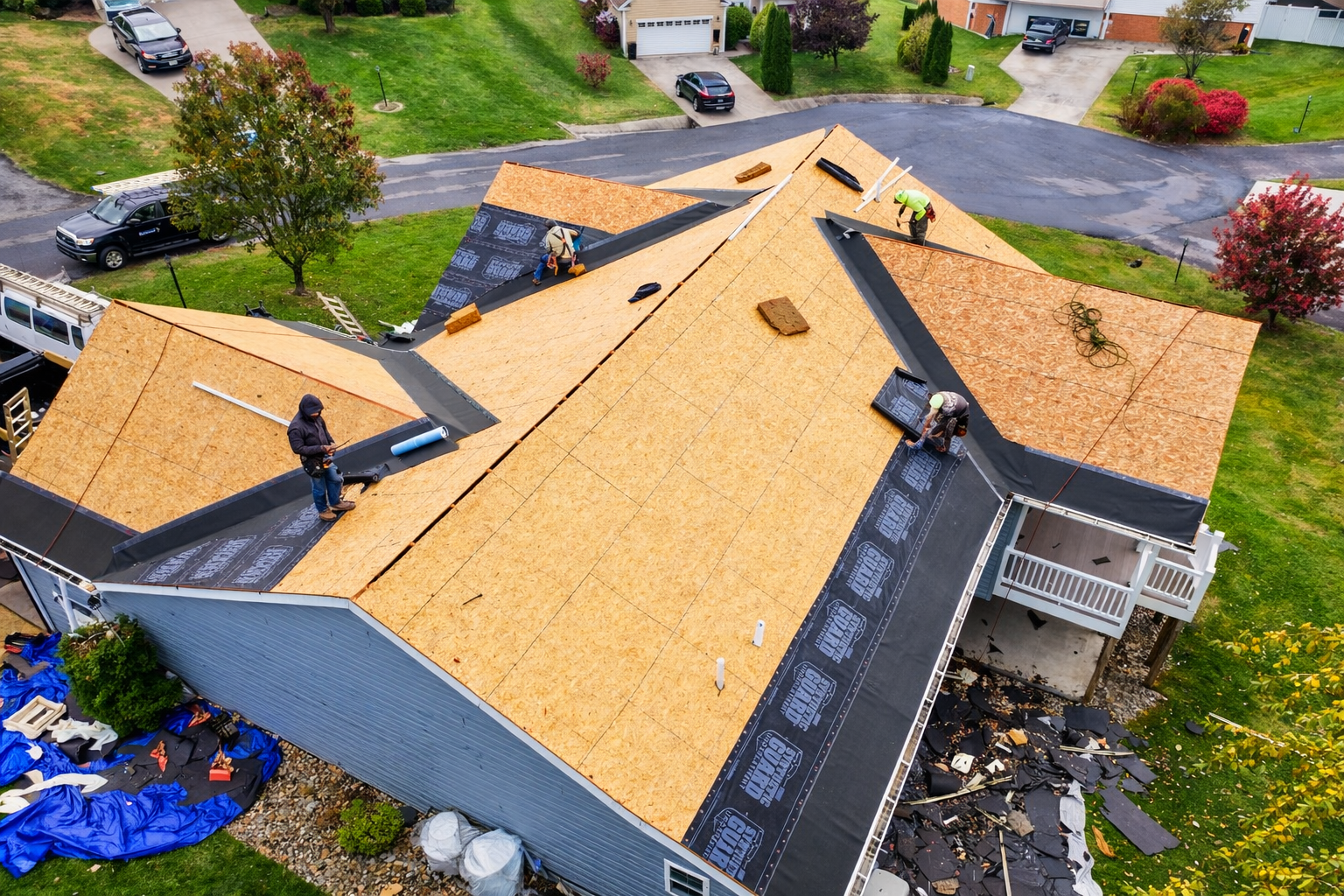
Thinking about getting a new roof but not sure what to expect? You’re not alone. Homeowners across West Virginia often ask questions like: “How long will my roof replacement actually take?”, “What should I budget for a quality roof in Martinsburg versus Morgantown?”, and “How do I prepare my family for the disruption?” This comprehensive guide will answer all those questions and more.
Getting a new roof is one of the biggest investments you’ll make in your home, and if you’re like most West Virginia homeowners we work with, you probably have a mix of excitement and anxiety about the whole process. That’s completely normal. After helping hundreds of families across our beautiful mountain state with their roof replacements, we’ve learned that most of the stress comes from simply not knowing what to expect.
In the sections below, we’ll break down roof replacement costs for basic, standard, and premium projects. We’ll also explore how costs and timelines vary by location – highlighting major WV cities like Charleston, Huntington, and Morgantown – and even compare West Virginia’s prices to neighboring states. You’ll discover the factors that affect roof replacement costs and timelines, get money-saving tips to make your project more affordable, and learn exactly what happens each day of your roof replacement. By the end, you’ll have a clear picture of what your roof replacement will cost and how long it will take in the Mountain State.
Ready to get started?
Let’s dive in and demystify the roof replacement process in West Virginia, so you can plan with confidence. (And if you find this guide helpful, feel free to share it with friends or bookmark it for later!)
Roof Replacement Cost Breakdown: Basic vs. Standard vs. Premium
One of the biggest factors in determining cost is the scope of your roof replacement. Are you doing a straightforward shingle replacement or upgrading to premium materials with additional features? Roof replacements in West Virginia generally fall into three tiers:
Basic Replacement: Lower cost materials with minimal upgrades.
Standard Replacement: Better quality materials with some upgrades and improvements.
Premium Replacement: High-end materials, additional features, and custom work.
Typical Price Ranges in West Virginia: Most West Virginia roof replacements fall roughly between $8,000 and $25,000. However, projects can certainly be done for less or more depending on what you include. For example, a basic asphalt shingle replacement on a smaller home might cost as little as $6,000, whereas a standard replacement with higher quality materials averages around $12,000-$18,000. On the high end, a premium roof with standing seam metal or top tier architectural shingles can reach $25,000 or more.
Let’s break down each category:
Basic Roof Replacement (Economical Asphalt Shingles)
A basic roof replacement focuses on restoring reliable weather protection using cost-effective materials. This option is often selected when the existing roof has reached the end of its service life without requiring structural upgrades.:
- 3-tab composition (Elite Glass-Seal) or basic architectural (Heritage) asphalt shingles
- Basic underlayment and standard flashing
- Straightforward installation with minimal customization
- Standard ventilation improvements
- Cleanup and removal of all job-related debris
Cost: In West Virginia, a basic roof replacement typically runs $6,000 to $12,000 depending on home size and complexity. For an average 1,500 sq ft home, you’re looking at roughly $8,000-$10,000. This price range assumes standard materials and straightforward installation without major sheathing or structural issues.
What you get for this budget: A reliable roofing system that will protect your home for 15-20 years. While basic, these roofs meet all building codes and provide excellent value. This is perfect for homeowners on a tight budget who need a functional and economical replacement without premium features.
Standard Roof Replacement (Higher Quality Materials & Upgrades)
A standard replacement offers better materials and additional improvements. It typically involves:
- Higher-quality architectural shingles (Titan-XT) with better warranties
- Upgraded underlayment (synthetic vs. felt)
- Potential ventilation system upgrades (soffit replacement, power exhaust fan installation)
- Enhanced trim coil counter flashing around chimneys and large penetrations
- Gutter cleaning and minor repairs included
- Cleanup and removal of all job-related debris
Cost: Standard roof replacements in West Virginia typically run about $10,000 to $18,000 for an average-sized home. Most homeowners in Fairmont, Huntington, and Morgantown see projects in the $12,000-$16,000 range for quality work. This aligns well with regional averages and provides excellent value for the investment.
What you get for this budget: A complete roof system that looks great and performs excellently. You’ll have high quality materials, proper ventilation, and professional installation that should last 30-50 years. Most “full” roof replacements in WV fall into this category, offering the best balance of cost and quality.
Premium Roof Replacement (High-End Materials & Features)
A premium replacement is a smart investment in the best materials available to protect your home:
- Top tier architectural shingles (StormFighter FLEX) or alternative materials (standing seam metal, synthetic slate)
- Premium-performance underlayments
- Advanced ventilation systems and energy-efficient features (solar fans, upgraded aluminum soffit, color match fascia)
- Custom flashing and detail work
- Upgraded gutters or gutter guards
- Enhanced warranties and extended service packages
- Possible structural improvements or additions
Cost: Premium roof replacements range from $18,000 to $30,000+ in West Virginia, depending on materials chosen and home complexity. Metal roofing or premium architectural shingles on larger homes can easily reach $25,000-$35,000. While materials cost roughly the same everywhere, labor in WV keeps total costs more reasonable than in major metropolitan areas.
What you get for this budget: A roof that’s built to last 50+ years with superior weather resistance and curb appeal. Premium replacements often include extended warranties, energy-efficient features, and materials that can significantly increase your home’s value.
Understanding Roof Replacement Timelines: What Really Determines Duration
Most residential roof replacements in West Virginia take 2-4 days for completion, but the entire process spans several weeks from consultation to final cleanup.
Timeline Factors:
Home Size & Complexity:
- Simple ranch home: 1-2 days
- Two-story home: 1-3 days
- Complex/ steep roof with dormers/skylights: 2-5 days
Weather Conditions:
- Clear weather: Work proceeds on schedule
- Rain threats: Work stops, may add 1-2 days
- High winds (25+ mph): Safety halt required
Material Type:
- Asphalt shingles: Fastest installation
- Metal roofing: Adds 1-2 days
- Specialty materials: May require additional time
Preparation Phase (1-2 weeks before installation):
- Comprehensive roof inspection
- Material/ color selection and ordering
- Permit acquisition
- Insurance coordination
- Crew scheduling
Your Play-by-Play Roof Replacement Experience (Standard Shingle Roof)
Day One: Tear Off and Dry In
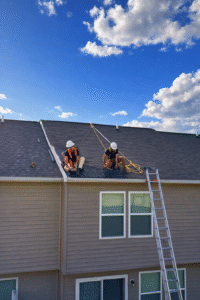
Early Morning: Materials arrive, crew sets up protection, tear off begins
- Tarps placed to protect landscaping
- Equipment positioned strategically
- Safety measures implemented
- Removal process begins
Afternoon: Complete tear off, dry in exposed surfaces
- Complete the removal process
- Roof decking inspection and repair
- Waterproof underlayment over all exposed surfaces
- Clean up and removal of tear off debris
Day Two: Shingle Installation
Early Morning: Inspection, shingle installation begins
- Inspection and preparation for installation
- Shingles moved from ground level to the roof
- Starter strip installed over eave and rake edges
- Shingle installation begins
Afternoon: Complete shingle installation
- Shingle installation continues
- Pipe flashing, step/ counter flashing, and surface vents are installed
- Shingle installation is completed with final ridge vent and ridge cap installed
- Inspection and additional sealing of any potentially vulnerable areas
- Final walkthrough and cleanup/ removal of any job-related debris
What You’ll Experience as a Homeowner
Noise Levels and Daily Schedule
Loudest Phase: Old roof removal (sounds like santa clause on steroids)
Quieter Phases: Dry-In and installation (sounds of boots, hammers, and nailguns)
Work Hours: Typically 7 AM to 7 PM to maximize daylight and minimize disruptions
Debris Management
- Tarps catch most debris during removal
- Continuous cleanup sweeps around property and neighboring property
- Magnetic tools for nail pickup
- Final inspection ensures clean property
Communication Throughout
- Consistent check-ins with crew leader
- Immediate notification of any issues
- Progress updates throughout the installation process
- Final walkthrough with project manager and homeowner
Preparing Your Home and Family
Vehicle and Property Protection
- Park vehicles at least 15–20 feet away from the home during active work
- Bring inside or securely cover patio furniture, grills, planters, and decorative items
- Cover or relocate delicate plants near the home’s perimeter
- Secure or remove outdoor items that could be affected by falling debris
These steps help protect personal property and provide clear access for crews and equipment.
Pet Considerations
- Roofing work produces loud, intermittent noise that can stress pets
- Consider boarding, daycare, or a quiet indoor space for noise-sensitive animals
- Keep pets indoors and away from active work zones at all times
- Inform the crew of any outdoor pets so safety precautions can be taken
Keeping pets secured helps prevent escape risks and ensures crew safety during material removal and installation.
Interior Preparation
- Remove fragile items from walls that share a roofline or exterior wall
- Cover furniture in rooms directly beneath work areas, especially top-floor spaces
- Expect moderate vibration and noise during tear-off and installation
- Keep windows closed to reduce dust infiltration
Proper interior preparation minimizes disruption and helps protect household belongings during roof removal.
West Virginia Weather Considerations
West Virginia’s mountain terrain creates rapidly changing weather conditions, which makes timing an important factor in any roof replacement project. In general, the most reliable window for roofing work runs from late spring through early fall, with May through October offering the greatest flexibility for scheduling.
Safety always comes first during any roofing project. Our crews closely monitor weather conditions and follow established safety protocols throughout the job:
- Heavy rain or wet surfaces pause roofing work due to slip hazards and material limitations
- High winds may delay installation depending on roof height, pitch, and task being performed
Each season presents unique considerations. Spring weather can shift quickly, so project schedules often include built-in flexibility. Summer offers efficient working conditions but higher demand. Fall provides cooler temperatures that are well-suited for roofing, while winter projects are more limited and remain highly weather-dependent.
Factors That Affect Your Roof Replacement Cost and Timeline
The size and complexity of your roof significantly impact both cost and timeline. Larger square footage naturally requires more materials and labor, while steeper pitches increase safety requirements and time. Architectural features like dormers, skylights, and chimneys add complexity that extends installation time.
Material cost and service life varies significantly:
- 3-tab Asphalt shingles: $80-$150 per square, fastest installation, 15-25 year expected service life
- Architectural shingles: $100-$250 per square, standard timeline, 25-50 year expected service life
- Metal roofing systems: $300-$1,100 per square, may add 1–3 additional days to installation, commonly 40-75 year service life or more when properly installed
Final material pricing depends on manufacturer, product line, roof design, and current market conditions.
Labor and contractor-related factors also influence outcomes. Larger or more experienced crews may complete work more efficiently, while complex roofs require additional planning and safety coordination. During peak roofing season, scheduling timelines may extend due to demand. Local contractors often provide cost and scheduling advantages through familiarity with West Virginia requirements, weather patterns, and building codes.
Additional cost factors include:
• Permit costs: $50–$500, depending on municipality and project scope
• Code upgrades: Older homes may require updates to meet current building or safety standards
• Unexpected issues: Homeowners should plan for 10-20% contingency for issues such as damaged decking or concealed structural repairs discovered after tear-off
Money-Saving Tips for Your West Virginia Roof Replacement
Project timing can influence overall costs. Scheduling a roof replacement during the fall or winter months may offer more flexibility, as demand is often lower outside of peak storm seasons. Homeowners with flexible timelines may find it easier to schedule work without delays that commonly occur during spring and early summer.
Smart strategies to reduce cost:
- Material selection: Choose roofing materials that align with your home’s value and long-term needs, balancing performance, appearance, and budget.
- Estimate comparison: Obtain at least three detailed, written estimates so workmanship, material quality, and warranties can be compared accurately.
- Local contractor experience: Working with contractors familiar with West Virginia homes and conditions can help avoid pricing gaps and scope issues.
For insurance claims, work with experienced contractors who understand documentation requirements and can help maximize coverage. Proper documentation ensures maximum benefits, and a new roof may reduce insurance premiums, providing ongoing savings.
After Your New Roof is Complete
The final inspection ensures complete satisfaction. Review all work performed and document everything with photos for warranty and insurance records. A thorough homeowner walkthrough addresses questions and ensures you understand and review basic maintenance considerations before closeout.
Typical warranty coverage includes:
- Material warranties: Manufacturer warranties on any material used during install explained in clear terms.
- Workmanship coverage: Warranty coverage for labor performed and methods of installation
- Warranty support: Clear contact information for future warranty or service questions.
Ongoing maintenance helps preserve roof performance over time. Seasonal visual inspections in the spring and fall can help identify minor issues early. Keeping gutters clear supports proper drainage, and monitoring attic ventilation helps maintain airflow. Periodic professional inspections may help extend roof life and support warranty compliance.
Long-term benefits of your new roof:
- Improved energy efficiency: Proper installation and updated materials can help reduce heating and cooling costs by improving insulation and ventilation performance.
- Increased home value: A new roof improves curb appeal and can positively impact resale value and buyer confidence.
- Potential insurance premium reductions: Some insurance carriers offer lower premiums or credits for newer roofing systems, impact-resistant materials, or updated construction, depending on policy and provider.
- Long-term protection: A properly installed roof provides durable protection against West Virginia weather conditions and reduces the likelihood of recurring repairs.
Professional installation matters. Correct installation ensures materials perform as intended, warranties remain valid, and the roof delivers its expected lifespan. A roof replacement is not just a repair. It is a long-term investment in your home’s protection, performance, and stability.
Ready to get started? Give us a call to schedule a free consultation! We’ll walk you through your roof replacement options, answer questions, and help you plan the next steps with clarity and confidence.