If your roof is leaking right now, protect the inside of your home first: catch the water, move your belongings, and photograph everything. Then call a roofer to stop the water at the source. Don’t climb up there yourself.
What to Do First When Your Roof Is Leaking
Your goal in the first hour is to limit the damage inside the house. Fixing the roof comes after that.
- Catch the water. Put buckets or trash cans under every drip. Lay plastic sheeting or old towels around them, because water hitting a bucket splashes farther than most people expect.
- Move what you can. Pull furniture, electronics, rugs, and anything valuable out of the wet area.
- Watch the ceiling. A bulging or sagging spot is holding water. Carefully puncture the lowest point so it drains in a controlled stream into a bucket. Otherwise it can let go across the whole ceiling at once. If the water is near a light fixture or outlet, stay clear of it and shut off power to that room at the breaker first.
- Stay off the roof. A wet roof is dangerous, and walking on shingles that are already compromised can damage them further.
How Much Water Is Already In by the Time You See It?
By the time a stain shows on the ceiling or a drip starts, an estimated 50 gallons of water has already come through the failure point. A leak that looks sudden has usually been developing for a while.
For that reason, treat any visible leak as urgent even if it looks small. It also explains why annual roof inspections matter. Finding a failure point before it shows up inside your home can save you thousands.
Document Everything in the First Hour
If you think you might file an insurance claim, what you capture early carries a lot of weight. Take photos and video of:
- Where the water is entering
- The ceiling and any staining, bulging, or sagging
- Water on the floor and any damaged belongings
- The storm itself, if that’s what caused it. Screenshot the weather alerts and photograph any debris in the yard
The more you record before cleanup or repairs begin, the stronger your position. Eclipse also documents the damage before and after any emergency work, which supports your claim. Your insurance company makes the decision on the claim.
What Happens When You Call Eclipse About an Active Leak
You can expect us to prioritize getting eyes on the roof as fast as we can. For emergencies during or right after a storm, we aim to respond within 24 hours. In most cases we’re on-site the same day or the next morning, depending on when you call and whether weather is affecting access.
If you’re outside our service area, we’ll tell you up front rather than leave you waiting.
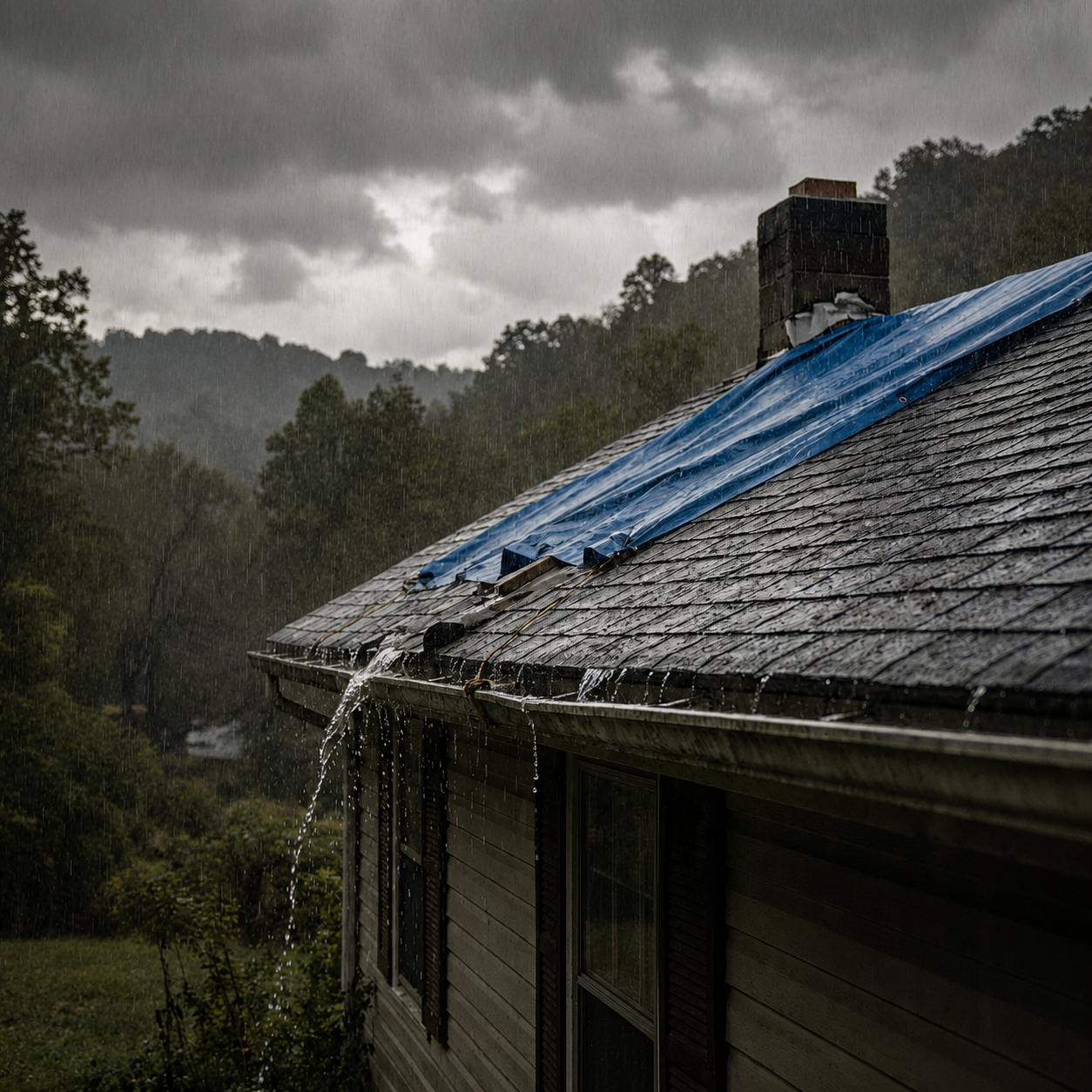
When we get on the roof, we do our best to seal any failure points we can identify right then, at no charge, while we schedule you for a proper repair or replacement. If the damage is too extensive for that, we put a full tarp over the affected area to stop more water from getting in until permanent work can be done.
Roof Tarping: What It Does and What It Costs
A tarp doesn’t fix the roof. It buys time and keeps a manageable problem from becoming a much bigger one.
A tarp only does its job if it’s installed correctly. We secure it so it won’t become a hazard in wind, and we position it to direct water away from the damaged area.
The cost depends on roof size and how hard the roof is to reach, and it’s billed to insurance where applicable. We won’t leave you with an open roof and water coming in while you wait on a scheduled repair.
Temporary Fix vs. Repair vs. Replacement
The right fix depends on what failed and how widespread the damage is. These are typical West Virginia ranges, and your actual cost depends on your roof.
| Option | What it covers | Typical cost |
| Emergency sealing or tarp | Stops water entry until permanent work | $300–$600 for a full tarp; sealing of identified failure points is at no charge on an Eclipse emergency call |
| Minor repair | Flashing, a small leak area | $600–$1,200 |
| Mid-range repair | A section of shingles, valley work | $800–$3,500 |
| Full replacement | Whole roof, when damage is widespread or the roof is worn out | $8,000–$20,000+, depending on size, pitch, and material |
A single leak doesn’t always mean a new roof. Many leaks come from a small failure point, like cracked flashing or a lifted shingle. Our roof repair page covers when a fix makes sense. When replacement is the better call, our roof replacement page lays out what’s involved.
Common Causes of Sudden Roof Leaks
Knowing the likely cause helps you describe the problem accurately when you call.
- Storm damage. Wind can lift or tear off shingles, and impact from hail or fallen branches can break through the surface. See our storm damage repair and restoration page.
- Failed flashing. The metal around chimneys, vents, skylights, and wall joints is a frequent entry point.
- Valleys. Water from two roof slopes concentrates where they meet, so valleys wear faster.
- Worn or missing shingles. Age, granule loss, and curling let water get underneath.
- Clogged gutters. Backed-up water can work its way under the roof edge.
Where the stain appears inside doesn’t always match where the water enters the roof. Water often travels along rafters or decking before it drips. That’s another reason to have someone trace the leak from the roof rather than guess from the ceiling.
Frequently Asked Questions
Should I call my insurance company or a roofer first?
Both. The roofer stops the water and documents the damage. Your insurance company opens the claim. Eclipse documents the damage but doesn’t negotiate claims on your behalf.
Will the leak stop on its own when the rain stops?
The dripping might, but the failure point is still there. Water can keep entering during the next rain, and damp materials can keep deteriorating in the meantime.
Call Eclipse About Your Roof Leak
If water is coming in, call Eclipse Construction at (304) 244-3334 or request a quote. We serve Morgantown, Cheat Lake, Bridgeport, Clarksburg, Fairmont, Westover, and Star City, across Monongalia, Harrison, and Marion Counties.