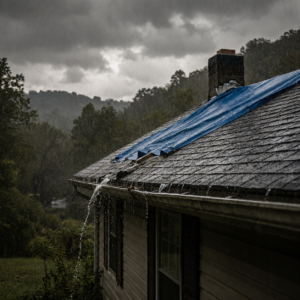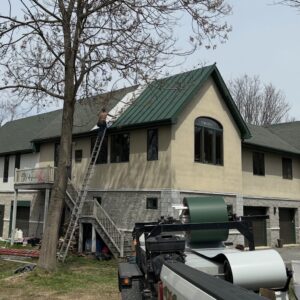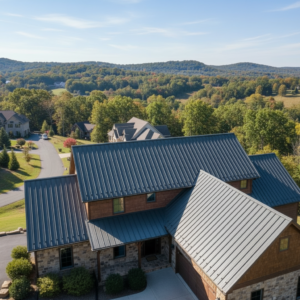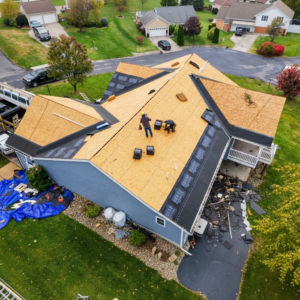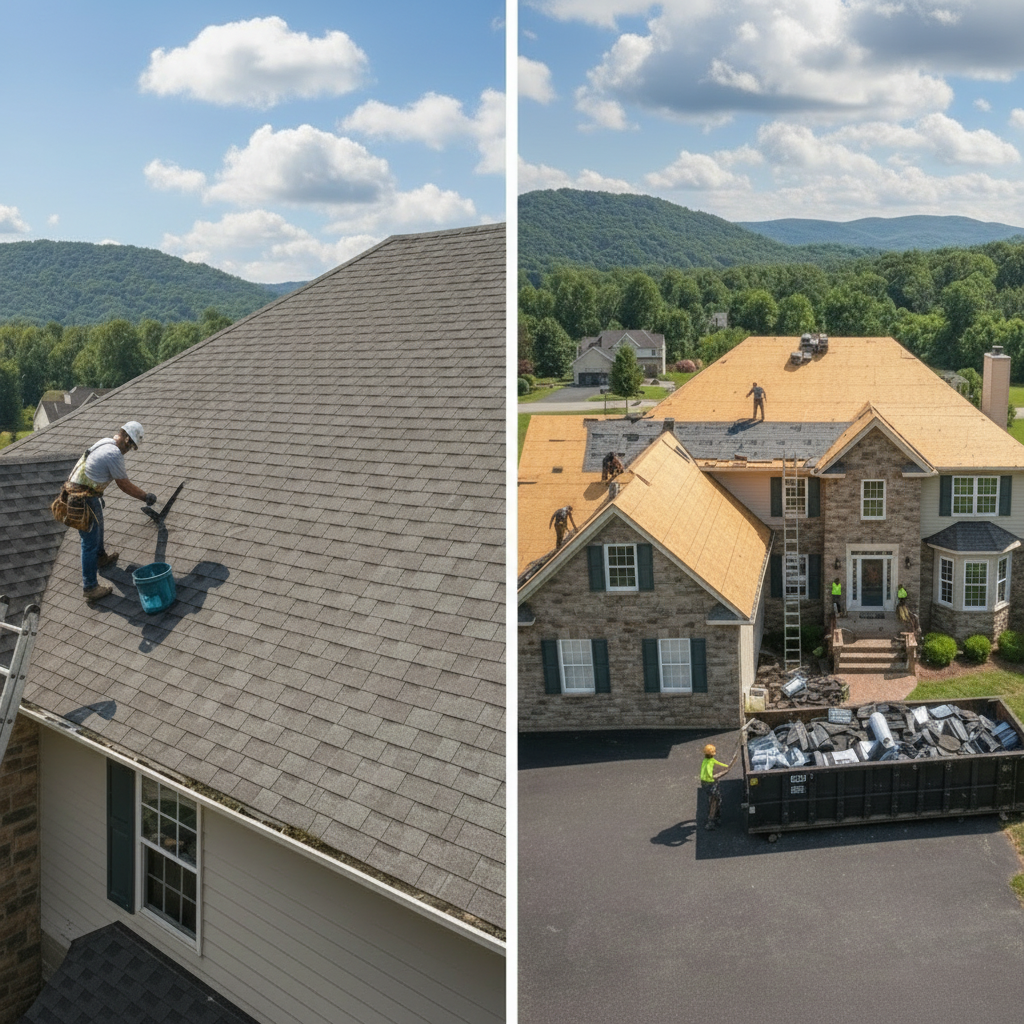
Repair is usually the right call when the damage is limited to one area and the rest of the roof is sound. In West Virginia, that typically runs $600–$3,500. Replacement makes more sense when there are several problems, the source of a leak keeps eluding people, or the roof was installed badly to begin with. A full replacement typically runs $8,000–$20,000+ depending on size, pitch, and material.
The hard part is telling which situation you’re in. A roof can look fine from the driveway and still be past repairing.
When Roof Repair Is Enough
A repair works when the problem is isolated, you can name it, and the materials around it are still in good shape. Typical examples:
- A small leak traced to flashing
- A section of damaged shingles
- Valley work on an otherwise healthy roof
Minor repairs like flashing or a small leak area typically run $600–$1,200. A section of shingles or valley work usually falls between $800 and $3,500. Our roof repair page covers what these jobs involve.
Signs You Need a Replacement Instead
Replacement becomes the better choice when repairs stop solving the problem. The main signs:
- Multiple failure points. Leaks in more than one place usually mean the roof as a system is failing, not one component.
- A leak nobody can trace. If the source is hard to pin down, or has already defeated a repair attempt, more repairs mean more guessing.
- Poor original installation. Roughly 80 percent of roofs are installed improperly, especially when it comes to ventilation. Fixing the visible symptom doesn’t fix how the roof was built.
- Brittle shingles. If they crack or break apart when touched, the roof is past repairing no matter how it looks from the ground.
- Repeated repair bills. Several attempts over two or three years can add up to more than a replacement would have cost at the start.
If you’re weighing a new roof, our roof replacement page explains how the process works.
Why a Shingle That Looks Fine Can’t Always Be Repaired
Many homeowners assume that if a shingle looks intact, it can just be swapped. Shingles have a repairability limit, and it’s easy to hit without knowing.
To replace one shingle, the roofer has to lift the ones around it. On an older roof or one with ventilation problems, those neighboring shingles can crease and crack from being disturbed. They weren’t the original problem, but now they’re compromised too. The repair created new failure points.
How Ventilation Decides the Answer
Ventilation plays a much bigger role than most homeowners realize.
The general industry standard is a ratio of 1 to 300 of ventilation to attic floor space, with both intake and exhaust. Without it, heat gets trapped under the roof and cooks the shingles from the inside out. Over years, that heat makes them brittle, and they break apart when touched.
That is why we evaluate the shingles, ventilation, flashing, decking, and installation quality together before recommending anything.
What You Can Check Yourself Without Climbing Up
You can gather real evidence before anyone visits, and you never need to step onto the roof to do it.
From the ground, with binoculars if you have them, look for:
- Shingles that are curling at the edges, cupped, or missing
- A ridge line that sags or dips instead of running straight
- Piles of loose granules in the gutters or at the downspout outlets
- Flashing around chimneys and vents that looks bent, lifted, or pulling away
From the attic, with a flashlight, look for:
- Daylight showing through the roof boards
- Dark stains on the underside of the decking, or damp insulation
- A musty smell
- Heat that feels intense on a warm day, which can point to poor airflow
One or two of these in a single spot points toward repair. A scattering of them across the roof points toward a larger problem. Either way, photograph what you find. It gives any contractor a better starting point and helps you compare what two of them tell you.
What Hidden Decking Damage Means for Your Decision
Shingles are the part you can see. The decking underneath is the plywood or boards they’re fastened to, and it often decides how big a job really is.
Water that has been getting in for a while can soften decking. Soft or spongy decking can’t hold fasteners well, so new shingles on top of it won’t stay put. A contractor often can’t confirm the extent until old shingles are off, which is why a firm number for decking work is hard to give from the ground.
This changes the repair-versus-replacement question in two ways. First, a patch over weak decking is a patch over a failing base. Second, if decking damage is spread across a large area, replacing the roof is often the more sensible way to get the work done properly. Ask any contractor you’re considering how they handle decking they find, and how they’ll tell you about it before adding to the job.
What Drives the Cost of a Replacement
The wide replacement range exists because roofs vary a lot. Three things move the number most:
- Size. More square footage means more materials and more labor.
- Pitch. A steep roof is slower and more demanding to work on, which raises labor costs.
- Material. Shingle lines and other roofing materials are priced differently.
A written estimate that lists these items separately is easier to compare than a single lump sum. If you’d like a rough replacement number before anyone visits, the instant roof estimate tool gives you a starting point.
Repair vs Replacement at a Glance
| Repair | Replacement | |
| Best when | Damage is in one area and the rest of the roof is sound | Problems are widespread, recurring, or tied to poor installation |
| Typical WV cost | $600–$1,200 (minor); $800–$3,500 (mid-range) | $8,000–$20,000+, depending on size, pitch, and material |
| What it fixes | The specific failure point | The whole roof system, including ventilation and flashing |
| Risk | Disturbing brittle shingles nearby; paying again if the cause was missed | Higher upfront cost |
| Warning sign | A second or third repair on the same roof | Shingles that crack or crumble when touched |
These are typical ranges, not quotes. Your actual cost depends on your roof.
What to Ask When Two Roofers Disagree
Getting two different recommendations on the same roof is common. It usually comes down to different experience, different views on how far the damage spreads, or a contractor with a financial reason to push the bigger job.
Ask both the same questions:
- How long have you been doing this, and have you seen this issue before?
- Can you walk me through the whole roof system, not just the damaged spot?
- What condition are the flashing and ventilation in?
- Are there signs the original roof was installed improperly?
- Can I see photos taken from up on the roof?
A contractor with your interest in mind will answer all of this clearly. One who gets defensive is telling you something too. If your question started with a storm, our storm damage repair and restoration page explains how that kind of assessment works.
Frequently Asked Questions
Can I replace just one side of my roof?
Sometimes. If one slope is damaged and the others are in good condition, a partial replacement can make sense. It depends on the age and condition of the rest of the roof and on whether the underlying problem, such as ventilation, affects the whole structure.
Will new shingles match my old ones?
Not always. Shingle colors weather over time, so a patch often looks different from the surrounding roof. This is usually cosmetic and matters more on a visible slope than a back one.
Can new shingles go over the old layer?
Some manufacturers and local codes restrict how many layers a roof can have, and an extra layer can hide decking problems. Ask your contractor what they’d inspect before deciding.
Get a Straight Answer on Your Roof
Not sure whether you need a repair or a new roof? Call Eclipse Construction at (304) 244-3334 or request a quote. We serve Morgantown, Cheat Lake, Bridgeport, Clarksburg, Fairmont, Westover, and Star City.